Geralt&#folio-qpuh-gsnf;s World Doesn&#folio-qpuh-gsnf;t Wait for You — and That&#folio-qpuh-gsnf;s Everything
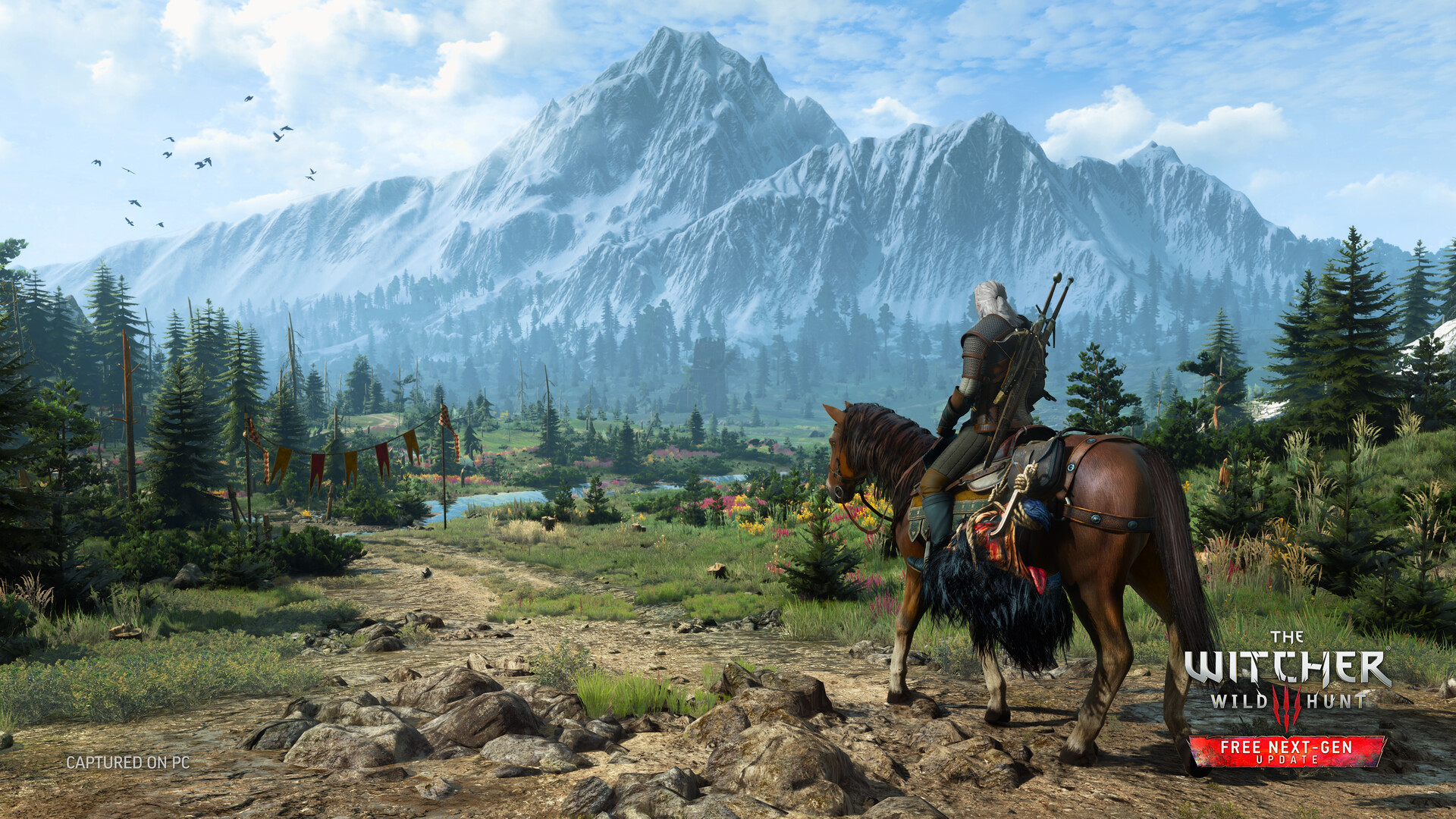
The Witcher 3: Wild Hunt came out in 2015, and it still gets brought up whenever someone tries to argue that open-world RPGs have gotten worse. That&#folio-qpuh-gsnf;s a strange kind of compliment — less about the game itself and more about everything that followed. But spending real time with it, the praise holds up in some specific ways, and falls apart in others.
CD Projekt Red built something that refuses to pause for your comfort. The world processes without you. Contracts expire. Characters move on. A village you ignored in one region has consequences in another. Whether that design philosophy produces a great experience depends almost entirely on how you engage with it — and how patient you&#folio-qpuh-gsnf;re willing to be with systems that were already somewhat dated by the time the game shipped.
The World Runs on Its Own Clock
What separates Velen and Skellige from the open worlds that came before them isn&#folio-qpuh-gsnf;t visual fidelity or map size. It&#folio-qpuh-gsnf;s that the writing treats geography as lived-in. Peasants reference the war that&#folio-qpuh-gsnf;s happening. Merchants are visibly nervous. You find a hanged man and there&#folio-qpuh-gsnf;s a notice nearby explaining exactly why he was hanged, and the explanation involves a character you might have already met. The environmental storytelling here is denser than anything Ubisoft was producing at the time, and it still outpaces most of what&#folio-qpuh-gsnf;s been released since.
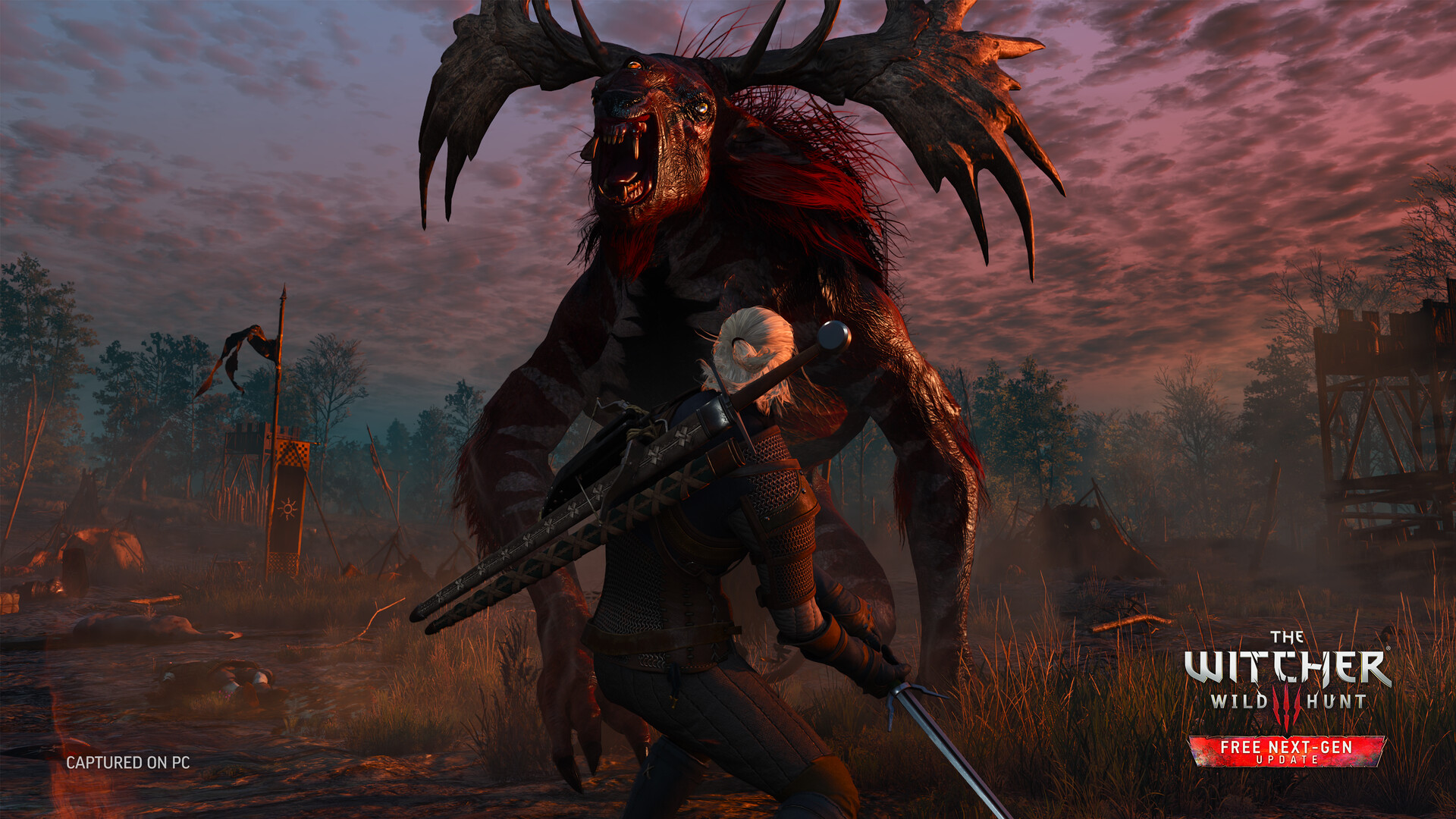 Atmospheric detail in The Witcher 3: Wild Hunt.
The contracts — hunting assignments posted on notice boards — deserve particular attention. These aren&#folio-qpuh-gsnf;t fetch quests with a monster attached. Most have a short investigation phase where Geralt uses his Witcher senses to reconstruct what happened. The mechanic is simple: highlighted objects, a brief deduction. But because the writing around it is almost always specific and grounded, it feels like problem-solving rather than busywork. Compare that to Dragon Age: Inquisition&#folio-qpuh-gsnf;s war table, where similar investigation fantasies collapse into menus and timers. Here, Geralt puts his boots in the mud.
Combat: Functional, Sometimes Frustrating
The combat is the part that ages worst. Geralt has five signs — magic abilities — a crossbow, bombs, and two sword styles. The system has more depth than it first appears: oil preparations that weaken specific enemy types, timing-based parries, positioning that matters against groups. But the controls have a slippery quality that never fully resolves. Geralt moves like he&#folio-qpuh-gsnf;s wearing boots a size too large. Locking onto enemies in tight spaces, particularly during indoor encounters, creates camera problems that feel like they belong to a different era of design entirely.
On the default difficulty, most fights are forgiving enough that this rarely matters. Crank it up to Death March, and the sloppiness becomes a genuine obstacle — not in the Souls-like sense, where punishment teaches precision, but in the sense that you&#folio-qpuh-gsnf;re fighting the interface as much as the enemy. The sign system, particularly Quen&#folio-qpuh-gsnf;s protective shield and Yrden&#folio-qpuh-gsnf;s slow trap, opens up genuine tactical thinking. The problem is that most enemies don&#folio-qpuh-gsnf;t demand it. You can coast through large portions of the game on fast attacks and a single potion.
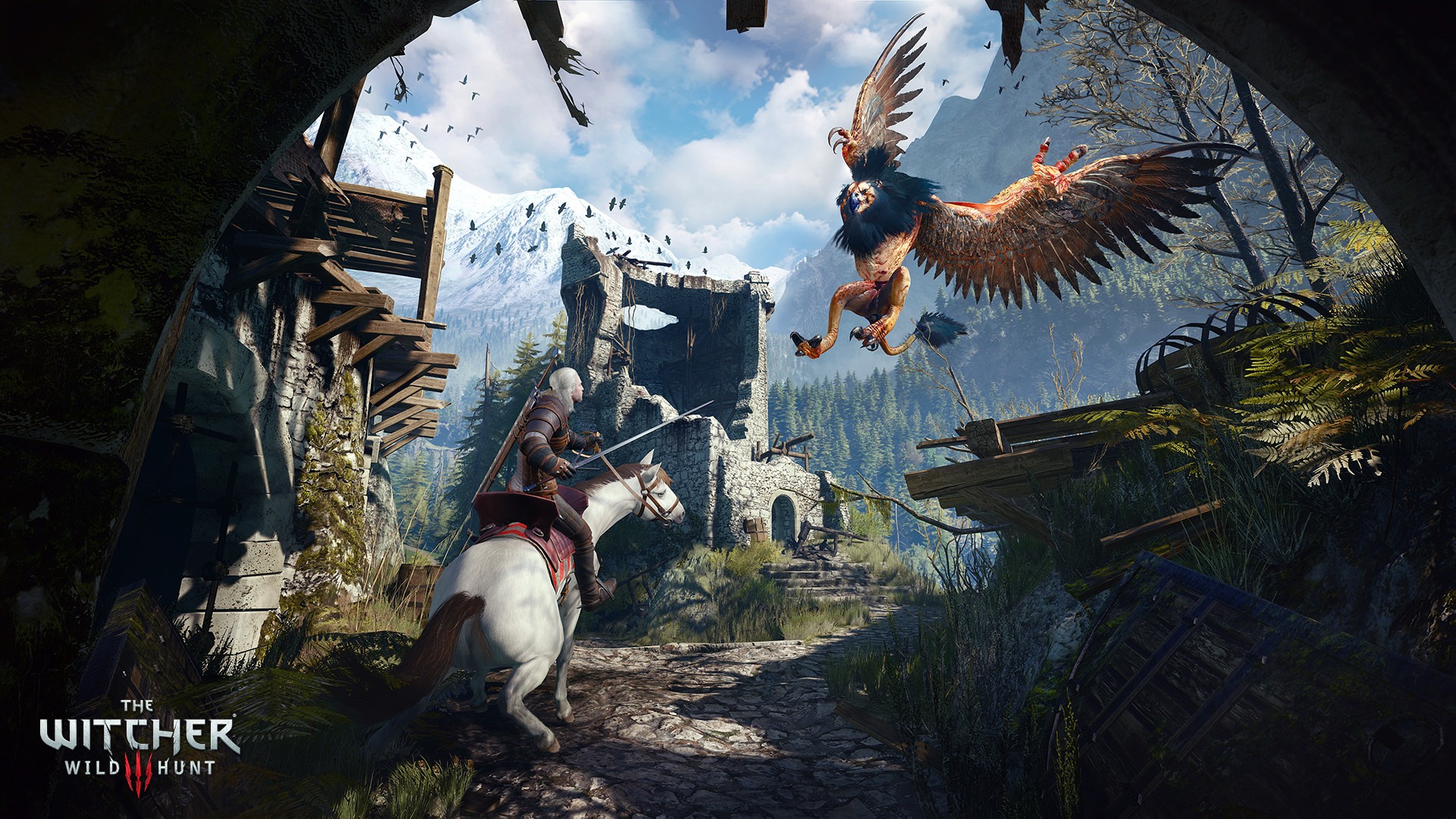 Combat encounter in The Witcher 3: Wild Hunt.
The Quests That Justify the Whole Thing
There&#folio-qpuh-gsnf;s a side quest where Geralt helps an actor prepare for a performance. There&#folio-qpuh-gsnf;s another involving a haunted manor, a woman&#folio-qpuh-gsnf;s ghost, and a branching investigation that ends with one of the most quietly devastating choices in the game. These aren&#folio-qpuh-gsnf;t outliers. The secondary content in The Witcher 3 is where the writing team clearly spent the most energy. Missions that start as errands — find the missing person, deal with the creature — regularly pivot into something more complicated.
The Bloody Baron questline has been written about extensively, and the praise is warranted. It takes domestic abuse, war trauma, and folklore and folds them into something that has no clean resolution. You can&#folio-qpuh-gsnf;t fix this family. You can only choose which damage you&#folio-qpuh-gsnf;re willing to accept. That willingness to leave players with something uncomfortable rather than satisfying is what separates CD Projekt Red&#folio-qpuh-gsnf;s writing from the genre standard. Most RPGs at this scale — Bethesda&#folio-qpuh-gsnf;s catalogue in particular — wouldn&#folio-qpuh-gsnf;t risk it.
Where the Pacing Loses Its Footing
The middle section of the main quest drags. There&#folio-qpuh-gsnf;s a stretch, roughly around the second act, where Geralt is shuffled between political factions with motivations that require significant investment in the franchise&#folio-qpuh-gsnf;s prior lore to fully parse. Players who haven&#folio-qpuh-gsnf;t read Andrzej Sapkowski&#folio-qpuh-gsnf;s novels or played the earlier games will find themselves following conversations that feel important without quite knowing why. The game never stops to catch you up in a useful way — a choice that feels principled but occasionally punishing for new arrivals.
The Novigrad section specifically — the sprawling city segment — has pacing problems that accumulate. Several quest threads converge there simultaneously, and the structure asks you to hold a lot of narrative threads at once. It&#folio-qpuh-gsnf;s not poorly designed so much as overloaded. By the time you clear Novigrad and move on, there&#folio-qpuh-gsnf;s a real temptation to ignore quest board clutter and just push the main story forward. The game doesn&#folio-qpuh-gsnf;t punish that instinct, but it&#folio-qpuh-gsnf;s worth resisting — some of the best writing is buried in what looks like noise.
What the Expansion Content Does Differently
Hearts of Stone and Blood and Wine, the two paid expansions, are not just additional hours — they&#folio-qpuh-gsnf;re structurally distinct from the base game. Hearts of Stone introduces Gaunter O&#folio-qpuh-gsnf;Dimm, a villain who genuinely unsettles, and builds a compact story around him that doesn&#folio-qpuh-gsnf;t overstay its welcome. Blood and Wine is longer, brighter, and more overtly a farewell — a French-countryside-influenced region that gives Geralt something the main game withholds for most of its runtime.
Whether these justify the additional cost depends on where you land after the base game. If the writing hooked you and the combat didn&#folio-qpuh-gsnf;t exhaust you, they&#folio-qpuh-gsnf;re worth it. Blood and Wine in particular contains some of the sharpest quest design in the entire package. If you hit a wall somewhere in Novigrad, neither expansion is going to convert you. They&#folio-qpuh-gsnf;re extensions of what the base game is, not corrections of what it isn&#folio-qpuh-gsnf;t.
Who This Is Actually For
Players who want reactive worlds with genuine consequence — who&#folio-qpuh-gsnf;d rather find an interesting journal entry in a ruined house than collect a hundred icons off a map — will get more out of this than almost any open-world game made before or since. Larian&#folio-qpuh-gsnf;s Baldur&#folio-qpuh-gsnf;s Gate 3 now rivals it for reactive writing, and has better combat. But The Witcher 3 does something Baldur&#folio-qpuh-gsnf;s Gate 3 doesn&#folio-qpuh-gsnf;t: it makes you feel the weather. The geography, the class structures, the exhaustion of post-war poverty — Velen is miserable in a way that feels deliberate and earned.
Players who want tight action systems, or who need the main story to explain itself clearly without prior context, will hit friction. The Next-Gen update improved some performance issues and added a handful of cosmetic content tied to the Netflix adaptation — not transformative, but stable. The core game is unchanged in its asks.
Nine years out, The Witcher 3 holds because it was built around a specific argument: that an open world should earn your time rather than fill it. It doesn&#folio-qpuh-gsnf;t always succeed on its own terms. The combat wobbles, the middle sags, and the political complexity occasionally tips from immersive into impenetrable. But when it works — when a ten-minute side quest lands harder than most games&#folio-qpuh-gsnf; endings — there&#folio-qpuh-gsnf;s still nothing else quite like it.
Editorial scoring
Reader Q&A
How long does it take to finish Geralt&#folio-qpuh-gsnf;s World Doesn&#folio-qpuh-gsnf;t Wait for You — and That&#folio-qpuh-gsnf;s Everything?
Main story runs around 32 hours depending on how thoroughly you explore. Completionists can spend 2-3× that.
Is Geralt&#folio-qpuh-gsnf;s World Doesn&#folio-qpuh-gsnf;t Wait for You — and That&#folio-qpuh-gsnf;s Everything good for newcomers to Open-World RPG?
For total newcomers, expect a 5-8 hour ramp-up. Once you internalize the loop, it clicks.
Which platform should I play Geralt&#folio-qpuh-gsnf;s World Doesn&#folio-qpuh-gsnf;t Wait for You — and That&#folio-qpuh-gsnf;s Everything on?
PC version offers the highest fidelity if your rig can handle it. Console versions are polished out of the box.
Was Geralt&#folio-qpuh-gsnf;s World Doesn&#folio-qpuh-gsnf;t Wait for You — and That&#folio-qpuh-gsnf;s Everything worth the launch-day price?
Released in 2015, and as of writing it holds up. Wait for a sale if you&#folio-qpuh-gsnf;re price-sensitive — major discounts arrive within 6 months.
Are there DLCs or expansions worth picking up?
Skip the cosmetic DLC. The story expansion is the only one we&#folio-qpuh-gsnf;d recommend at full price.
What did CD Projekt Red get right (and what could be better)?
Strongest: art direction, audio design, set-piece variety. Weakest: late-game balance and a few persistent quest-log bugs.