Sleeping Dogs Still Hits Harder Than It Has Any Right To
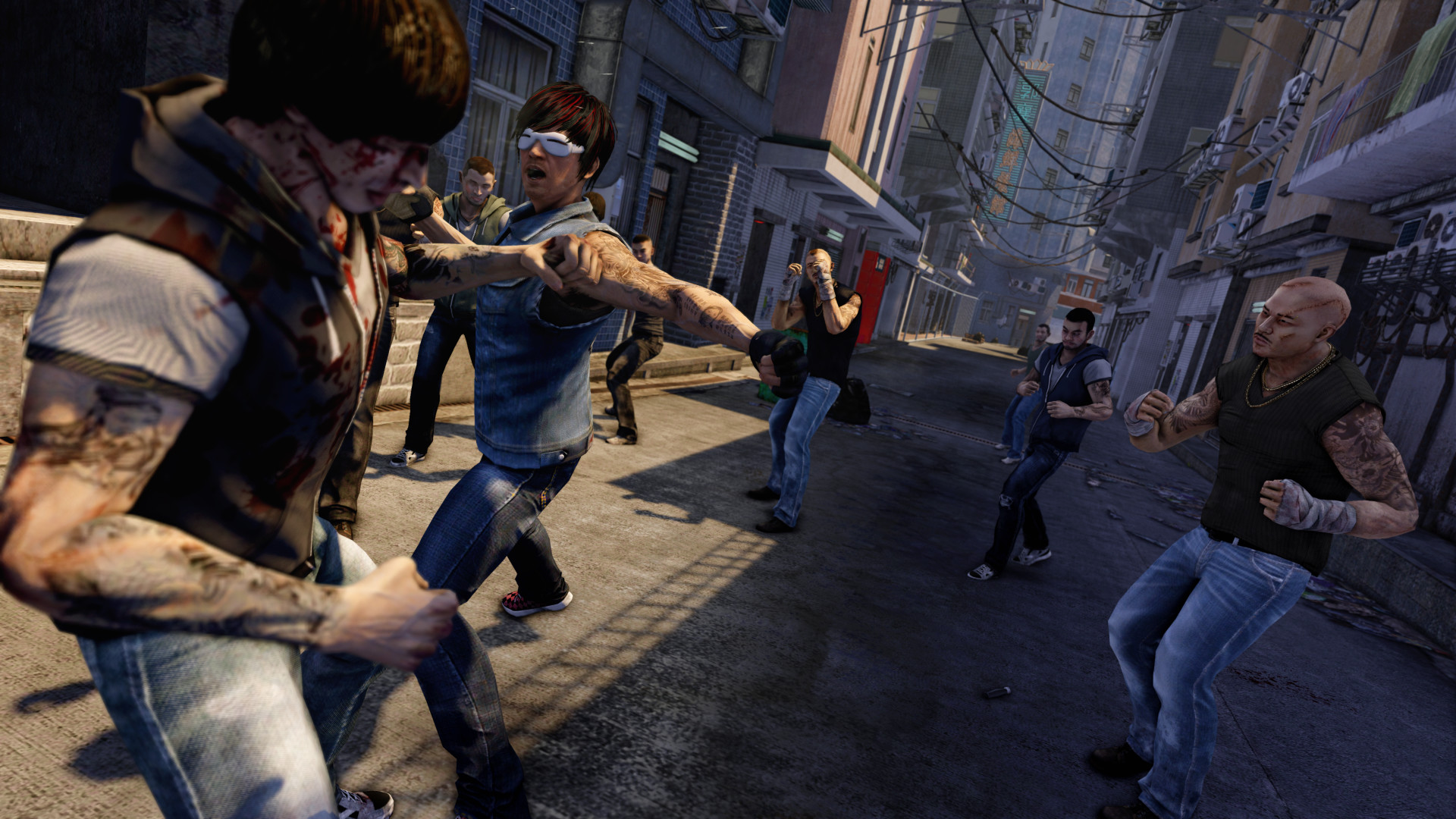
Sleeping Dogs came out in 2012 to the kind of reception that should have launched a franchise. Critics liked it. Players who found it mostly liked it a lot. United Front Games had built something that felt genuinely distinct inside a genre — open-world crime action — that was already crowded with Rockstar&#folio-qpuh-gsnf;s fingerprints on everything. Then the sequel never came. The studio shut down in 2016. And the Definitive Edition, which bundled the DLC and upscaled the visuals, has sat in the middle distance ever since: not quite a cult classic, not quite forgotten.
Playing it now, in 2024, is a slightly disorienting experience. Some of it feels old in ways that are genuinely limiting. Some of it feels sharper than games released years later. The interesting question is not whether you should buy it — it costs very little and the answer is probably yes — but why it still works at all, and where United Front&#folio-qpuh-gsnf;s design instincts were ahead of what the genre eventually became.
The Combat System Nobody Properly Copied
The hand-to-hand system is the obvious place to start, because it is still the best thing in the game. United Front borrowed the counter-and-combo rhythm that the Arkham series had established, but routed it through something more brutal and environmental. Grappling enemies into air conditioning units, wall-mounting them against chain-link fences, throwing them off balconies — the game is constantly offering you the geometry around you as a weapon. Most open-world games treat melee as a fallback for when you run out of ammunition. Sleeping Dogs treats it as the primary language.
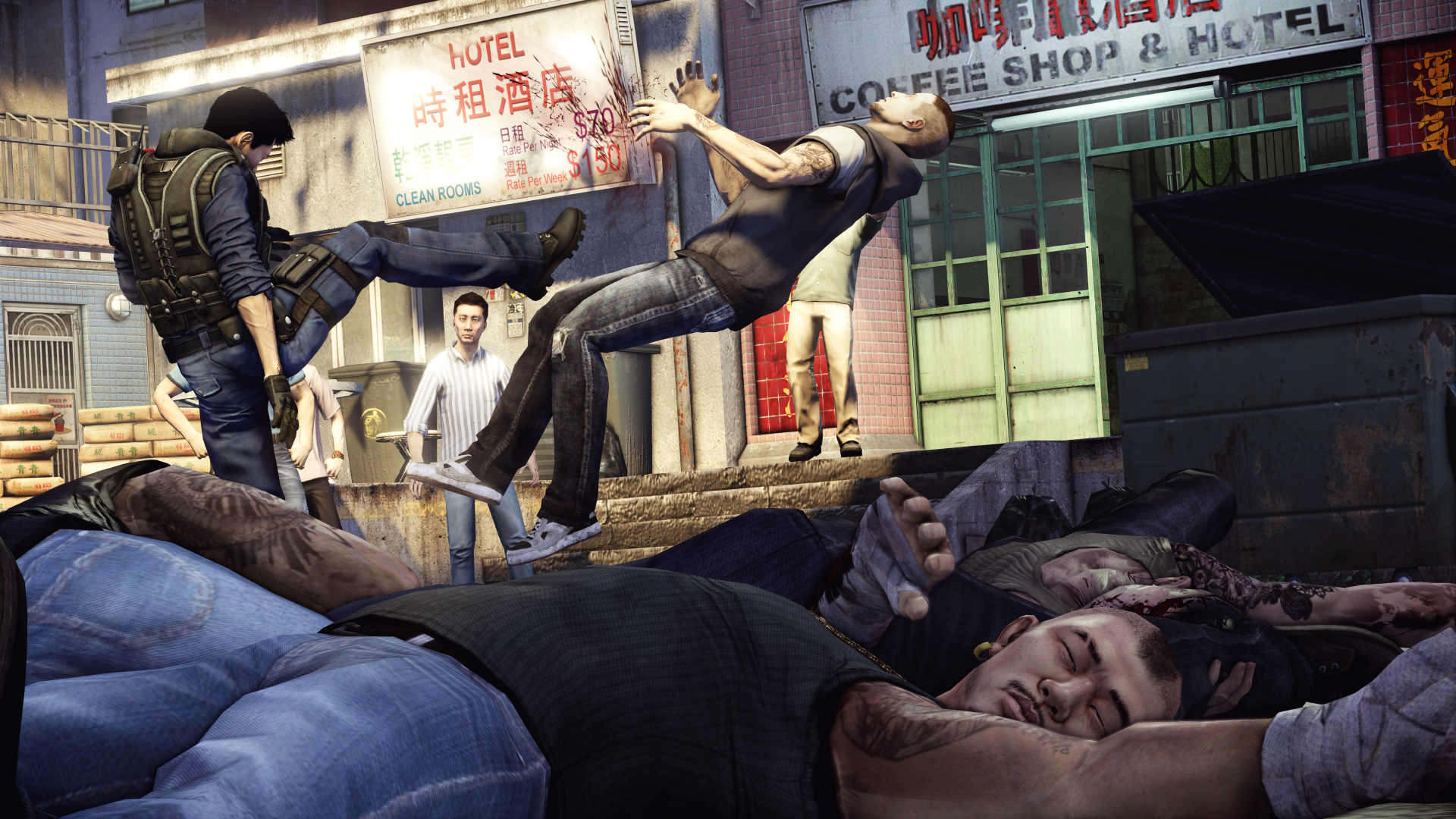 Scene from Sleeping Dogs: Definitive Edition.
What makes the combat hold up mechanically is that it has a real learning curve without being punishing about it. Early on, the counter window feels generous. By the mid-game, enemies attack in overlapping patterns and you are genuinely required to manage range, positioning, and the grapple-versus-strike decision simultaneously. The face-kick that knocks an enemy back into a group has different value depending on where you are standing. That level of spatial thinking is not something the genre has consistently maintained — even recent entries in the Saints Row line largely gave up on it.
Wei Shen Is Doing More Work Than He Gets Credit For
The undercover-cop framing is not original. What United Front did with it is more interesting than the premise suggests. Wei Shen is not positioned as morally superior to the people around him. The game tracks his relationship with the Sun On Yee through a separate progression system — triad XP versus cop XP — and the accumulation of triad reputation is not presented as corruption so much as genuine belonging. He is good at this life. He finds parts of it satisfying. The game does not editorialize about that constantly.
The voice performance by Will Yun Lee carries a lot of the tonal work. Lee plays Wei as someone who code-switches fluently between identities without the performance ever feeling like he is doing impressions of himself. The quieter scenes — conversations with Jackie Ma early in the game, the scenes with his sister&#folio-qpuh-gsnf;s memory — have a specific weight that most open-world protagonists never get because their games are too busy pointing at the next marker. Sleeping Dogs slows down for those moments, sometimes abruptly, and it mostly earns the gear-shift.
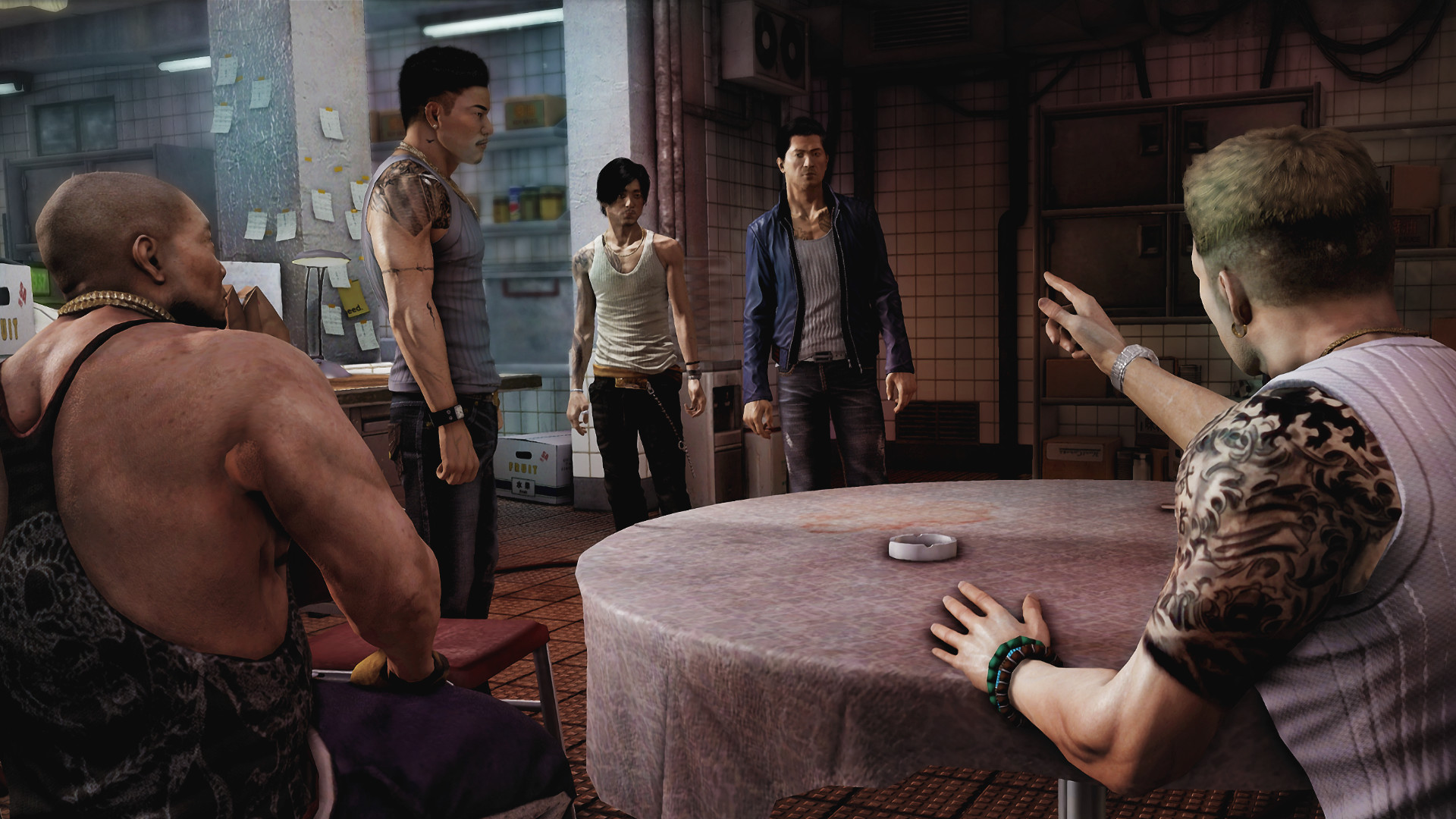 Scene from Sleeping Dogs: Definitive Edition.
Hong Kong as a Setting, Not as a Backdrop
The city is mid-sized by open-world standards and denser than it might initially appear. Aberdeen, the night markets, the rooftop areas accessible through side activities — each district has a different texture, both visually and in the kind of activities that cluster there. It is not a simulation of Hong Kong in any serious documentary sense, but United Front did enough specific work on the aesthetic that the setting functions as an actual character rather than a reskin of a generic American city with neon signs added.
The food stall mechanic is a small example of this doing real design work. Eating from street vendors restores health and grants temporary bonuses, which means you are constantly interacting with the city at street level rather than treating it as a race track between objectives. It is a minor system. But it is the kind of minor system that shapes how you move through a space. The Definitive Edition&#folio-qpuh-gsnf;s visual upgrade helps — the wet-road reflections and nighttime lighting in the market areas hold up surprisingly well against games released four or five years later.
Where the Design Shows Its Age
The driving is fine and occasionally good, which in 2012 was a meaningful qualifier. In 2024 it is the part of the game that feels most like a period artifact. The car handling sits in an awkward middle ground — not simulation, not fully arcade — and the highway chase sequences that the game stages as setpieces have a scripted rigidity that was less obvious when the genre norm was lower. You can feel the invisible walls.
The mission structure is also more repetitive than nostalgia tends to remember. There are a lot of follow-this-person sequences, a lot of hold-this-position-while-enemies-arrive sequences. The combat is good enough to survive this repetition longer than it should, but somewhere in the back half of the main story the mission design starts leaning on the combat to do structural work it was not meant to carry alone. A few missions in the later acts feel like the team ran out of time, or budget, or both. Given that the game&#folio-qpuh-gsnf;s development history involved a near-cancellation and a publisher change, that is not entirely surprising.
The DLC Is Uneven and Worth Knowing About
The Definitive Edition includes a large amount of additional content, and the quality varies enough that it deserves a specific note. The Year of the Snake campaign — a post-story addition that puts Wei in a doomsday-cult scenario — is genuinely good. It has a different tone from the main game, leaning into something closer to action-thriller than crime drama, and it is long enough to feel like a real extension rather than a content drop. The Nightmare in North Point content, a horror-comedy side story involving supernatural elements, is shorter and more divisive. It is enthusiastically weird. Whether that enthusiasm translates to fun depends somewhat on your tolerance for the game&#folio-qpuh-gsnf;s mechanics being applied to enemy types they were not originally designed around.
The cosmetic and vehicle DLC that fills out the rest of the bundle is mostly ignorable. It exists, it works, it adds nothing narratively. The Definitive Edition&#folio-qpuh-gsnf;s value is really in the two story additions, and on that basis it holds up.
What United Front Was Actually Arguing
The game makes an implicit argument that open-world design benefits from constraint. The map is smaller than Grand Theft Auto V&#folio-qpuh-gsnf;s. The systems are fewer than Red Dead Redemption 2&#folio-qpuh-gsnf;s. But the combat has more depth than either, the protagonist has more interiority than most, and the setting does more specific cultural work than open-world games typically attempt. United Front was not trying to out-scale Rockstar. They were trying to out-focus them.
That argument did not produce a sequel, which is still genuinely unfortunate. Square Enix has shown periodic interest in reviving the IP and has done nothing visible with it. The Definitive Edition is what exists, and it is enough. Not every game needs a franchise. Some of them just need to be played.
Sleeping Dogs is one of those cases where the gap between its reputation and its actual quality has widened in the game&#folio-qpuh-gsnf;s favor over time. Play it for the combat. Stay for Wei Shen. Leave slightly annoyed that nobody ever made a follow-up.
Editorial scoring
Reader Q&A
How long does it take to finish Sleeping Dogs Still Hits Harder Than It Has Any Right To?
Main story runs around 32 hours depending on how thoroughly you explore. Completionists can spend 2-3× that.
Is Sleeping Dogs Still Hits Harder Than It Has Any Right To good for newcomers to Open-World Action?
Yes — Sleeping Dogs Still Hits Harder Than It Has Any Right To is a great entry point. The early hours teach the systems gradually and the difficulty curve is reasonable.
Which platform should I play Sleeping Dogs Still Hits Harder Than It Has Any Right To on?
PC version offers the highest fidelity if your rig can handle it. Console versions are polished out of the box.
Was Sleeping Dogs Still Hits Harder Than It Has Any Right To worth the launch-day price?
Released in 2014, and as of writing it holds up. Wait for a sale if you&#folio-qpuh-gsnf;re price-sensitive — major discounts arrive within 6 months.
Are there DLCs or expansions worth picking up?
Skip the cosmetic DLC. The story expansion is the only one we&#folio-qpuh-gsnf;d recommend at full price.
What did United Front Games get right (and what could be better)?
The systems are confident and the combat is satisfying. The story handoffs and load times are the rough spots.