Mafia III&#folio-qpuh-gsnf;s Rage Burns Bright — If You Can Outlast the Grind
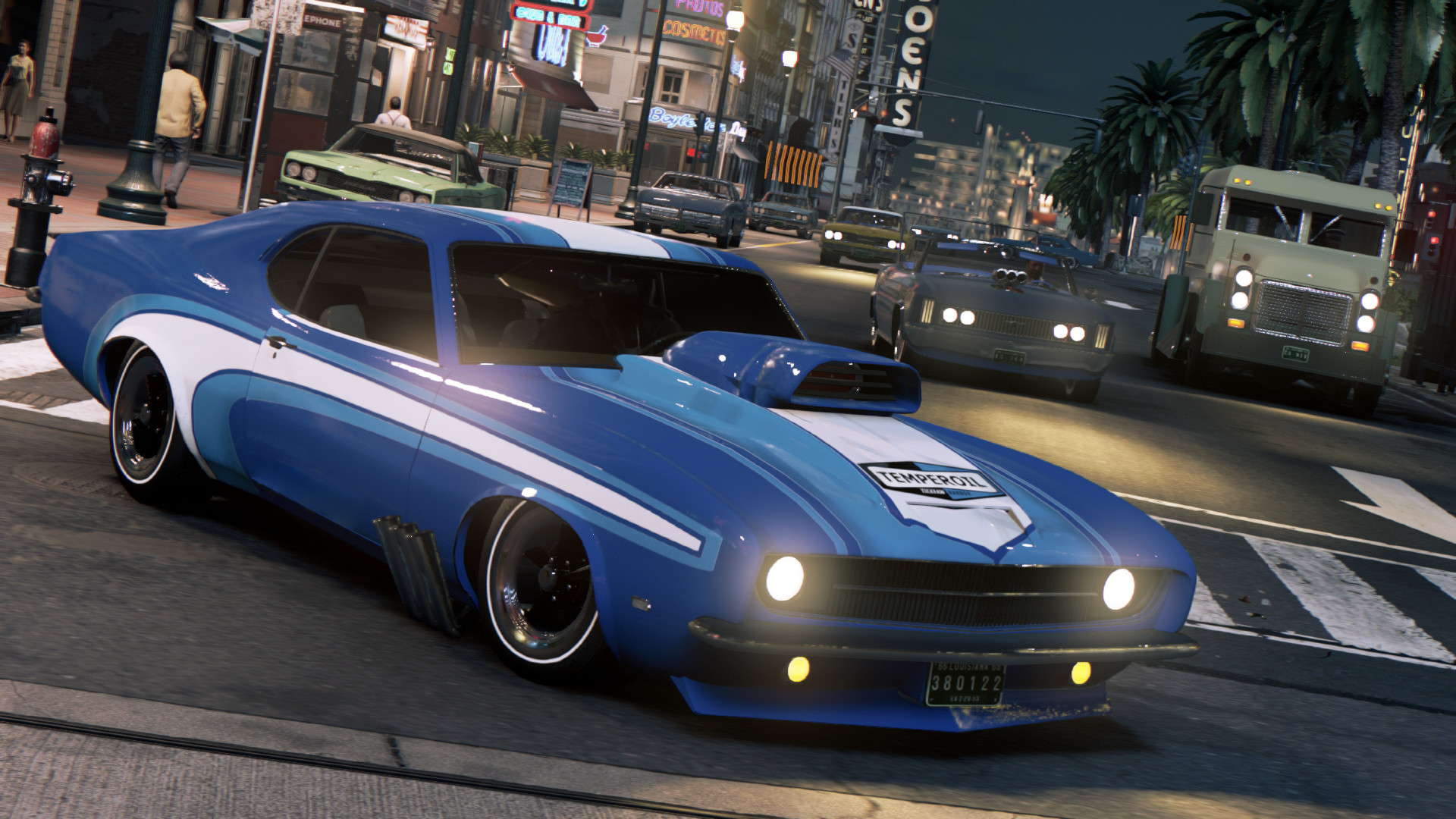
Mafia III came out in 2016 to a reception that was, charitably, mixed. Hangar 13&#folio-qpuh-gsnf;s open-world crime game had a story people respected and a structure people resented. The Definitive Edition bundles in all three story DLCs and cleans up the presentation, but it doesn&#folio-qpuh-gsnf;t sand down the repetition that made the original divisive. What it does do is give you a second, calmer look at one of the most emotionally committed open-world games of its generation.
Lincoln Clay is not a power fantasy. He&#folio-qpuh-gsnf;s a Vietnam veteran returned to New Bordeaux in 1968, watching the Black mob family that raised him get wiped out by the Italian Marcano crime syndicate. The game never lets you forget the racial architecture of that city — the redlined districts, the casual cruelty of white NPCs, the way certain areas simply close off to Lincoln based on his skin color. That&#folio-qpuh-gsnf;s not set dressing. It&#folio-qpuh-gsnf;s load-bearing. And it makes the revenge plot feel like it has actual stakes rather than just an excuse to unlock new guns.
The About That Earns Its Runtime
The framing device helps. Mafia III structures its narrative as a retrospective documentary — talking-head interviews, archival footage, historical context — which gives the whole thing a weight that the present-tense chaos can&#folio-qpuh-gsnf;t always sustain on its own. It draws obvious comparisons to The Godfather&#folio-qpuh-gsnf;s storytelling register, and it mostly holds up. Sal Marcano is a specific, believable villain. Lincoln&#folio-qpuh-gsnf;s three underbosses — Cassandra, Vito Scaletta, Thomas Burke — each carry their own histories and grievances, and the game forces you to keep them all satisfied or watch the alliances fracture.
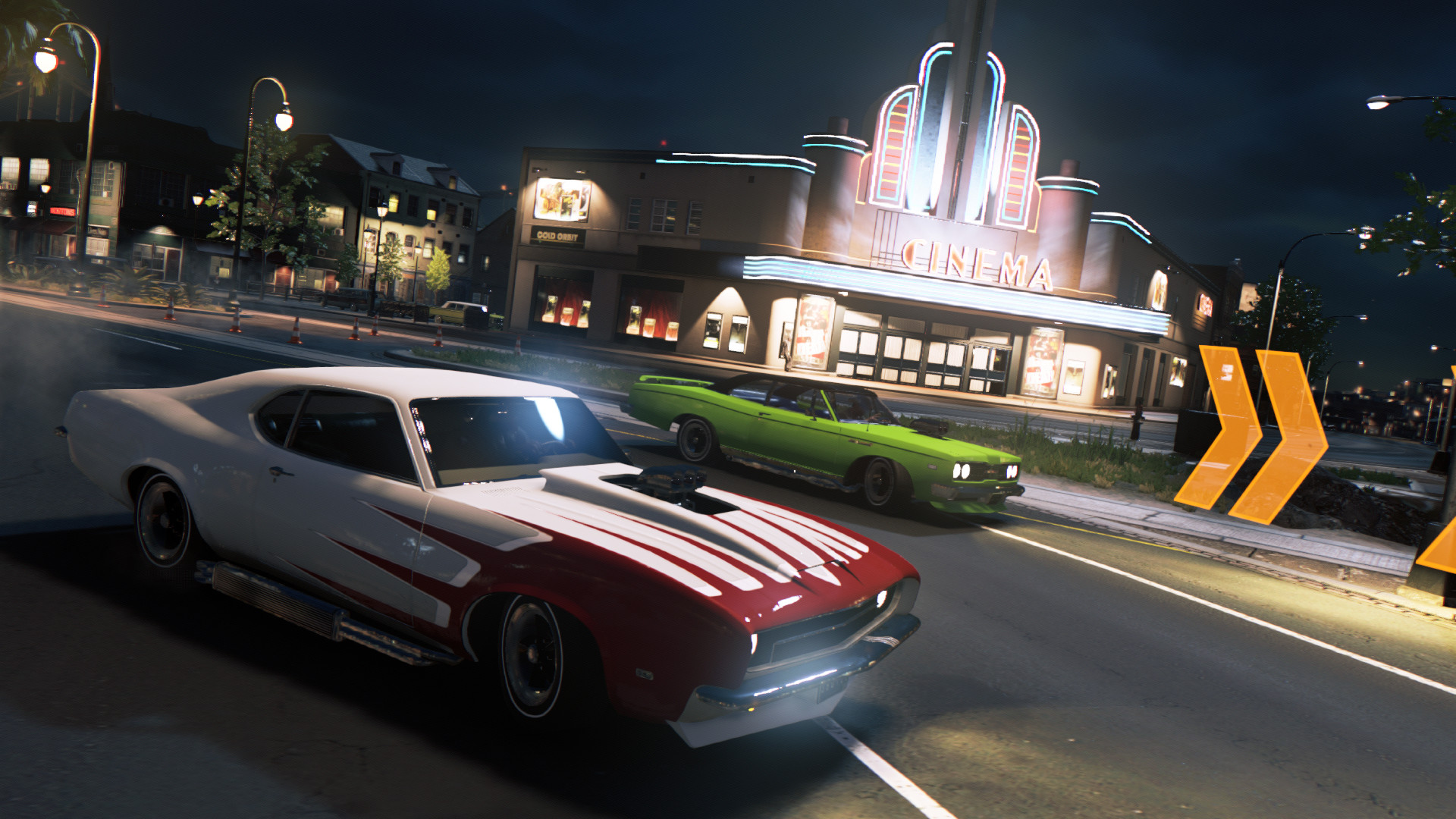 Scene from Mafia III: Definitive Edition.
Vito&#folio-qpuh-gsnf;s presence is a direct thread from Mafia II, and it&#folio-qpuh-gsnf;s handled with care. He&#folio-qpuh-gsnf;s older, diminished, in over his head in a city that doesn&#folio-qpuh-gsnf;t belong to him. The writing around him avoids cheap nostalgia — he&#folio-qpuh-gsnf;s not there to remind you he was cool once, he&#folio-qpuh-gsnf;s there because the story needs someone who understands what Lincoln is building and still doubts whether it&#folio-qpuh-gsnf;ll hold. Small thing, but it works.
The DLC campaigns — Faster, Baby!, Stones Unturned, and Sign of the Times — vary in quality. Faster, Baby! is the sharpest of them, dropping Lincoln into a story about civil rights organizers and state-level corruption that fits the main game&#folio-qpuh-gsnf;s tone almost seamlessly. The other two are entertaining enough but feel more like genre exercises than extensions of what the core story was doing.
Combat That Works Until It Doesn&#folio-qpuh-gsnf;t
The combat is cover-based third-person shooting, competent and not much more. Lincoln moves well, the stealth takedowns are satisfying in the way early Splinter Cell stealth kills were satisfying — direct, physical, immediately readable. Whistling enemies toward you and snapping their necks from behind a dumpster never stops being useful. The problem is that the enemy AI is inconsistent enough that you&#folio-qpuh-gsnf;ll sometimes feel clever and sometimes feel like the game is just not paying attention.
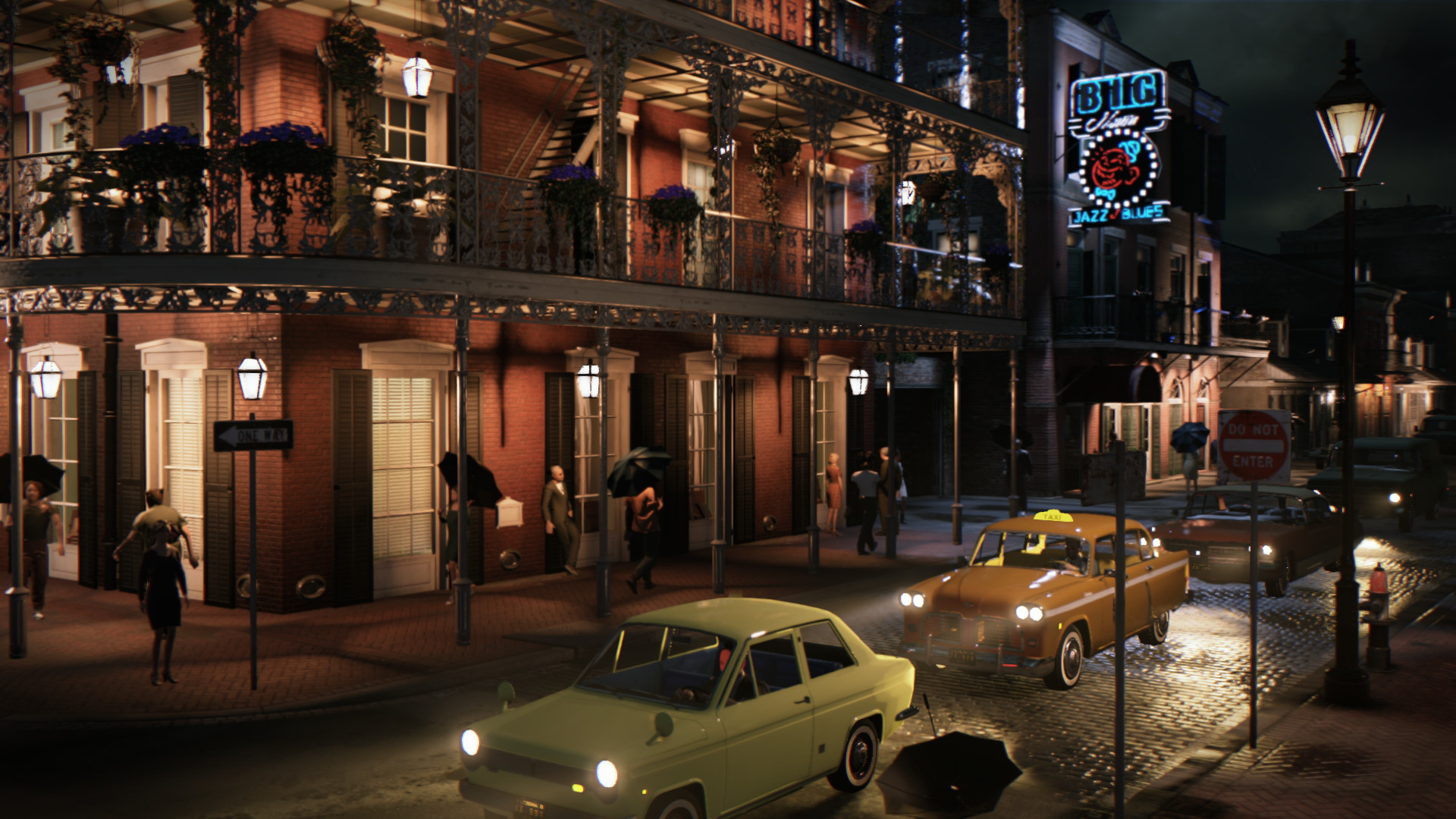 Scene from Mafia III: Definitive Edition.
The weapon selection does what it needs to do without reinventing anything. Shotguns feel chunky, the .45 revolver has the right amount of kick, and the automatic weapons are functional in the kind of anonymous way that suggests the designers knew the gunplay wasn&#folio-qpuh-gsnf;t the headline. That&#folio-qpuh-gsnf;s honest, at least. Compared to something like Max Payne 3, where the shooting is the whole argument, Mafia III&#folio-qpuh-gsnf;s combat is content to be the vehicle, not the destination.
The Repetition Problem, Addressed Honestly
Here&#folio-qpuh-gsnf;s where the game loses people, and it&#folio-qpuh-gsnf;s worth being direct about it. Mafia III&#folio-qpuh-gsnf;s core loop for taking over New Bordeaux involves raiding rackets, killing or flipping lieutenants, and eliminating district bosses. Then doing that again in the next district. Then again. The game has nine districts. By the fourth or fifth, the process is identical enough that you&#folio-qpuh-gsnf;re essentially running the same mission type with a new coat of paint and a different name over the door.
The Definitive Edition doesn&#folio-qpuh-gsnf;t fix this. There&#folio-qpuh-gsnf;s a classic mode that reportedly speeds up certain progression elements, which helps at the margins, but the structural repetition is baked in. If you burned out on this in 2016, the 2020 repackage won&#folio-qpuh-gsnf;t rehabilitate your experience. What it might do is reframe it — if you go in knowing the rhythm, knowing you&#folio-qpuh-gsnf;re essentially playing a story delivery system with busywork between chapters, the grind becomes manageable. It&#folio-qpuh-gsnf;s the same way some people replay Sleeping Dogs for the story beats and just tolerate the collectibles.
It&#folio-qpuh-gsnf;s also worth saying that the open world itself doesn&#folio-qpuh-gsnf;t pull its weight. New Bordeaux looks good — the late-1960s American South has a specific visual character that Hangar 13 renders with real attention — but there isn&#folio-qpuh-gsnf;t much to do in it outside the mission structure. The city is a stage, not a playground. Rockstar built playgrounds. Hangar 13 built a set, and the difference is obvious.
New Bordeaux as a Historical Object
Where the game earns real credit is in how it builds its 1968 setting as something more than aesthetic. The soundtrack is exceptional — Creedence Clearwater Revival, The Rolling Stones, Aretha Franklin, Jimi Hendrix — but the music isn&#folio-qpuh-gsnf;t just background noise. It&#folio-qpuh-gsnf;s contextual. Songs shift depending on what&#folio-qpuh-gsnf;s happening, and the selections are specific enough to feel curated rather than licensed.
More importantly, the game refuses to let the period be comfortable. Loading screen vignettes about the history of racial segregation in the American South sit alongside gameplay that forces Lincoln to literally redraw the maps of power in a segregated city. That&#folio-qpuh-gsnf;s a design choice, and it&#folio-qpuh-gsnf;s a coherent one. Whether it lands depends partly on what you bring to it, but it&#folio-qpuh-gsnf;s clearly intentional in a way that, say, Watch Dogs 2&#folio-qpuh-gsnf;s engagement with race and technology never quite managed to be.
Performance and the Definitive Edition&#folio-qpuh-gsnf;s Value
On PC, the Definitive Edition runs cleanly at high framerates without the issues that plagued the original launch version, which had frame-rate caps that baffled people at the time. The visual upgrades are modest — better textures, some lighting improvements — but the game already had a distinct look that holds up reasonably well. It&#folio-qpuh-gsnf;s not a remaster that transforms the source material, just one that stops actively getting in the way.
The three DLC packs included bring the total content volume to something that feels complete. Faster, Baby! alone is worth a few hours of your time. Sign of the Times goes somewhere tonally unusual that some players will find interesting and others will find jarring. None of it is padding in the cynical sense — each campaign has a throughline and a payoff.
Who This Game Is For Now
Mafia III is not trying to compete with the ambition of something like Red Dead Redemption 2 or the structural tightness of Mafia: Definitive Edition, the 2020 remake of the original game that came out the same year this bundle dropped. It&#folio-qpuh-gsnf;s an older, rougher thing. The seams show.
But Lincoln Clay&#folio-qpuh-gsnf;s story is one of the few open-world revenge narratives that actually bothers to contextualize the rage. Not just present it — contextualize it. The game knows why Lincoln is angry, shows you the systems that produced that anger, and builds its mechanics around dismantling those systems piece by piece. That&#folio-qpuh-gsnf;s a coherent design idea, even when the execution gets monotonous.
If you bounced off this in 2016, the Definitive Edition probably won&#folio-qpuh-gsnf;t change your mind. But if you missed it, or you want to revisit it with the right expectations — a story game with repetitive busywork, not a systemic open world — it holds. The rage still burns. You just have to earn it.
Editorial scoring
Reader Q&A
How long does it take to finish Mafia III&#folio-qpuh-gsnf;s Rage Burns Bright — If You Can Outlast the Grind?
Main story runs around 47 hours depending on how thoroughly you explore. Completionists can spend 2-3× that.
Is Mafia III&#folio-qpuh-gsnf;s Rage Burns Bright — If You Can Outlast the Grind good for newcomers to Open-World Crime?
For total newcomers, expect a 5-8 hour ramp-up. Once you internalize the loop, it clicks.
Which platform should I play Mafia III&#folio-qpuh-gsnf;s Rage Burns Bright — If You Can Outlast the Grind on?
Console version is the most stable on launch. PC version benefits from the modding scene long-term.
Was Mafia III&#folio-qpuh-gsnf;s Rage Burns Bright — If You Can Outlast the Grind worth the launch-day price?
Released in 2020, and as of writing it holds up. Wait for a sale if you&#folio-qpuh-gsnf;re price-sensitive — major discounts arrive within 6 months.
Are there DLCs or expansions worth picking up?
The base game is complete; expansion DLC adds 10-15 hours of additional content if you want more.
What did Hangar 13 get right (and what could be better)?
Hangar 13 nailed the moment-to-moment loop and the world-building. Pacing in the mid-game and inventory UX have room for improvement.