Ichiban Keeps Dreaming Even When the Game Lets Him Down

Kasuga Ichiban is, by any reasonable measure, too much. He believes in people past the point of sense, quotes Dragon Quest at real-world crises, and treats a stint in a Hawaiian resort town as an opportunity for genuine emotional growth. He is exhausting in the way that only the most sincere characters are — and Like a Dragon: Infinite Wealth banks almost everything on whether you find that quality charming or insufferable.
The short version: it&#folio-qpuh-gsnf;s mostly charming, occasionally bloated, and intermittently brilliant. RGG Preview Room&#folio-qpuh-gsnf;s follow-up to Yakuza: Like a Dragon is a longer, louder, more mechanically ambitious game than its predecessor — which means its failures are proportionally larger too. This is a JRPG that can produce a cutscene so quietly devastating it sits in your memory for days, and then ask you to manage a part-time job mini-economy for eight hours. Both of those things are real, and you should know about both before you commit sixty-plus hours.
Turn-Based, But Not Passive
The combat system inherits the job-class structure from the previous game but moves the pieces around in ways that matter. Characters occupy physical positions on a field rather than standing in a static row, and enemy placement now requires genuine spatial consideration. Knock an enemy into a cluster of their allies and you trigger a chain reaction; position Ichiban too close to a ledge mid-fight and he&#folio-qpuh-gsnf;ll plummet a storey, losing his turn. It makes the moment-to-moment feel less like menu navigation and more like a puzzle being assembled under time pressure.
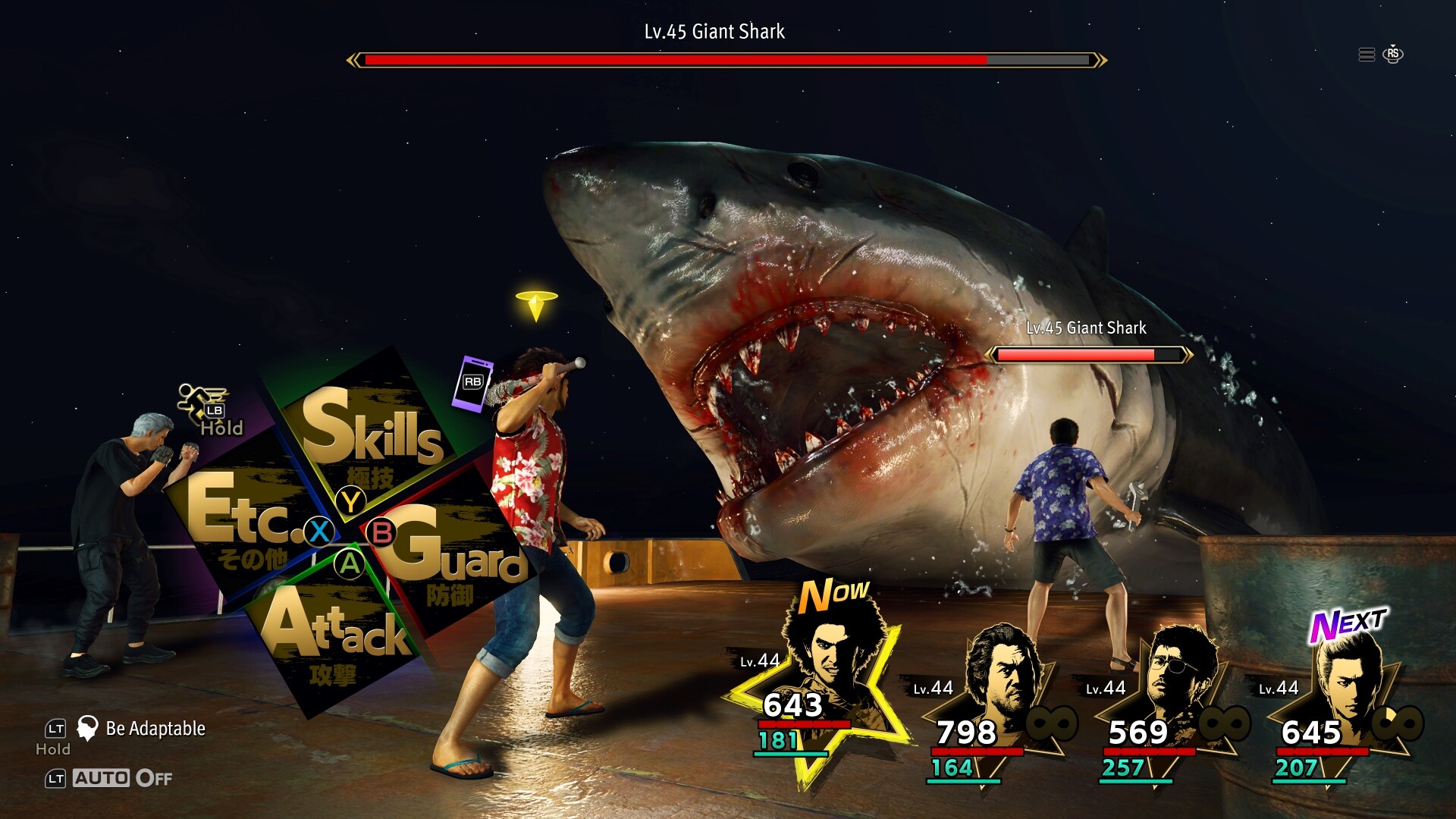 Scene from Like a Dragon: Infinite Wealth.
The job system is where most players will spend their build-crafting time, and it rewards that investment — up to a point. Swapping jobs accrues passive stat bonuses that carry across class changes, which encourages experimentation rather than punishing specialisation. The problem is that the mid-game pacing means you&#folio-qpuh-gsnf;ll hit certain skill caps right around the chapters where combat is at its most interesting, and by the time new job options open up, the fights have already started to feel routine again. It&#folio-qpuh-gsnf;s a pacing mismatch that other JRPGs have managed better; Final Fantasy XIV&#folio-qpuh-gsnf;s job progression, however different in structure, does a cleaner job of keeping the novelty cycle aligned with difficulty curves.
Hawaii as a Setting vs. Hawaii as a World
The move from Yokohama to Honolulu is one of the boldest structural calls RGG Preview Room has made, and it largely lands. The open area of Honolulu — dense with beach vendors, maintenance workers, underground fighting circuits, and tourist-trap restaurants — functions as both a practical playground and a thematic argument. Ichiban arrives there as an outsider, broke and searching for his mother, and the city reads as a place designed to extract money from people in exactly his position. There is real texture in that dissonance between the postcard imagery and what the game shows beneath it.
What the setting does less convincingly is differentiate its zones in terms of gameplay identity. Where Kamurocho in earlier Yakuza titles had a density that made individual streets memorable, many of Honolulu&#folio-qpuh-gsnf;s districts blur together on return visits. The late-game areas feel more distinct, but by that point you&#folio-qpuh-gsnf;re navigating fast-travel and quest markers more than the city itself. It&#folio-qpuh-gsnf;s a wide map — the width just doesn&#folio-qpuh-gsnf;t always mean depth.
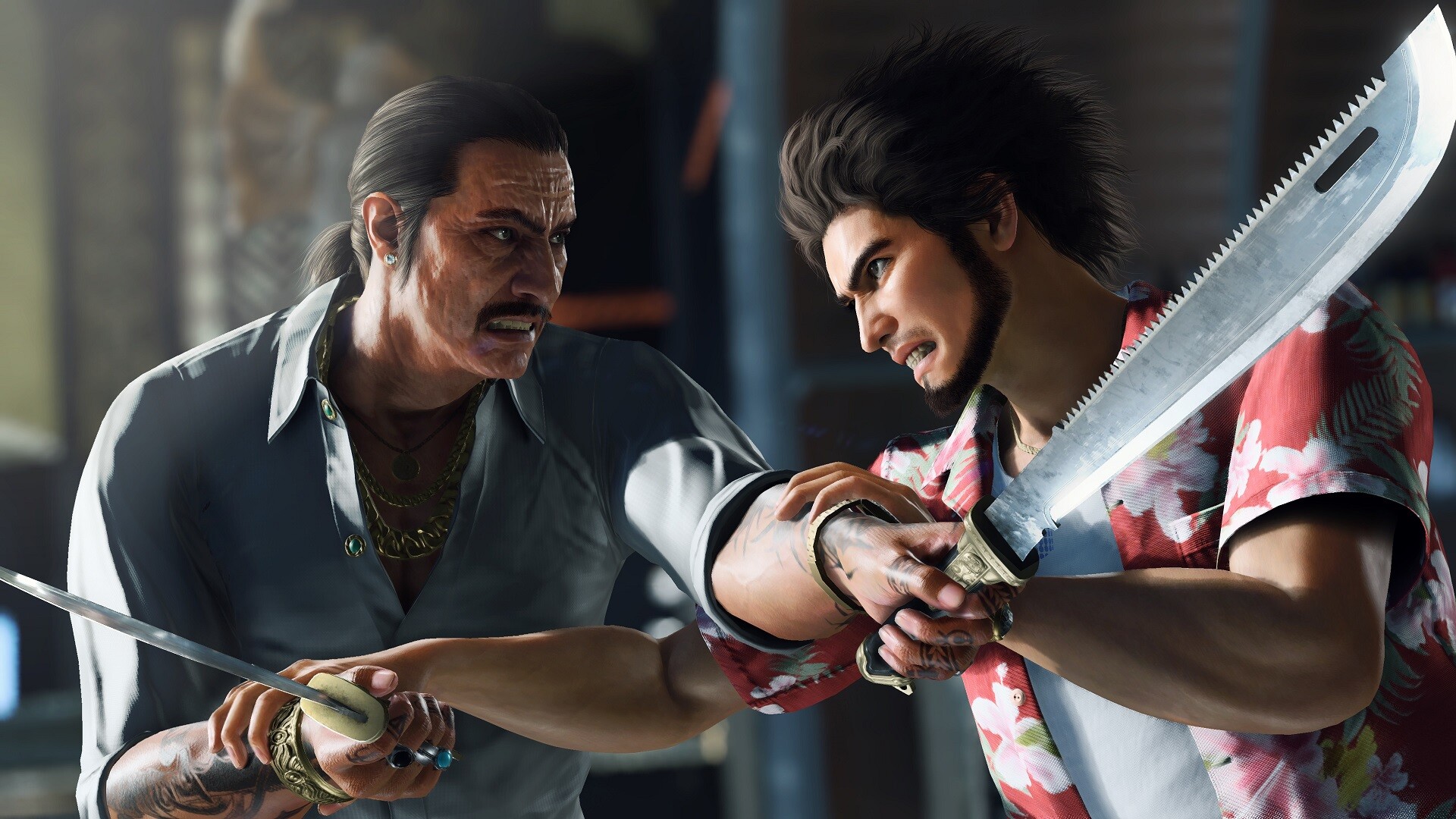 Scene from Like a Dragon: Infinite Wealth.
The Sub-Stories Are Still Where the Heart Lives
If you played any previous Yakuza or Like a Dragon game, you know that the sub-stories — the optional side quests scattered throughout the city — are frequently stranger and more affecting than the main narrative expects. Infinite Wealth keeps this tradition and, in several cases, sharpens it. Some of the best writing in the game lives in quests that never get flagged as important, involving characters who appear once and leave cleanly, with no sequel hook and no reward beyond the satisfaction of having paid attention.
There are also sub-stories that don&#folio-qpuh-gsnf;t work, leaning on punchlines that feel lifted from a slightly earlier cultural moment. RGG Preview Room&#folio-qpuh-gsnf;s relationship with comedy has always been uneven — Yakuza 0 had both the best and most cringe-inducing humour in the series — and Infinite Wealth doesn&#folio-qpuh-gsnf;t break that pattern. The ratio of hits to misses is good enough to keep hunting, but temper your expectations around the ones involving internet culture or social media parody, which tend to age noticeably even within the game&#folio-qpuh-gsnf;s own release window.
Where the Structure Works Against Itself
Infinite Wealth introduces a life-sim layer called Palma-something adjacent to a relationship management system — building bonds with party members unlocks combat abilities and story content. In concept, it mirrors what Persona 5 does with its Confidant system, and there are moments where it earns that comparison. Certain bond events genuinely recontextualise characters in ways the main story doesn&#folio-qpuh-gsnf;t have time for. Kiryu&#folio-qpuh-gsnf;s presence in the roster especially benefits from this; some of his quieter scenes, built through optional bonding, are the most honest writing about illness and stubbornness I&#folio-qpuh-gsnf;ve encountered in a major release recently.
The problem is that the system sits inside a broader structure that doesn&#folio-qpuh-gsnf;t regulate its own scope. There are too many management mechanics running simultaneously — the bond system, a job-ranking economy, a minigame ecosystem involving a social media follower count, a separate farming-adjacent activity on a residential island — and no single one of them receives the polish it deserves. Individually, none of these are bad ideas. Running them in parallel across sixty hours creates a cognitive overhead that flattens the emotional impact of the things that actually matter. Suikoden II packed 108 recruitable characters into a fraction of this runtime and felt more coherent doing it.
Kiryu and Ichiban in the Same Room
The central creative risk is putting Kazuma Kiryu — the protagonist of seven mainline games, a character whose arc should by any logic be finished — into active partnership with Ichiban. It&#folio-qpuh-gsnf;s a handoff that a lot of legacy franchises fumble, keeping the old lead too central to let the new one breathe. Infinite Wealth mostly gets this right. Kiryu functions as a foil and a complication rather than a co-protagonist, and the game understands that the interesting tension is not who is stronger but what each of them represents about how to care about other people.
I won&#folio-qpuh-gsnf;t claim every beat of that relationship lands. There are chapters where the writing leans too hard on callback emotion — moments designed to hit harder if you&#folio-qpuh-gsnf;ve played Yakuza 6 or Judgment — and a viewer coming in fresh would reasonably find some of those scenes opaque. But the final act earns what it&#folio-qpuh-gsnf;s going for, and that&#folio-qpuh-gsnf;s not a given in a series that has occasionally mistaken volume for weight.
The Verdict, More or Less
Like a Dragon: Infinite Wealth is the kind of game that&#folio-qpuh-gsnf;s hard to score cleanly because its highs and lows don&#folio-qpuh-gsnf;t average out — they coexist, sometimes in the same hour. The combat is the most mechanically interesting the series has produced in the turn-based format. The main story has a final act that genuinely delivers. The sub-stories, at their best, are doing things that most games with five times the budget won&#folio-qpuh-gsnf;t attempt.
What you&#folio-qpuh-gsnf;re accepting in exchange is a game that doesn&#folio-qpuh-gsnf;t know how to stop adding systems, occasionally loses track of its own pacing, and has a map that&#folio-qpuh-gsnf;s more impressive on paper than it is to inhabit. Those are real costs. Whether they&#folio-qpuh-gsnf;re acceptable depends somewhat on your tolerance for JRPG sprawl and, more honestly, on whether Ichiban&#folio-qpuh-gsnf;s relentless optimism reads to you as earned or exhausting. For what it&#folio-qpuh-gsnf;s worth: by the end, I found myself convinced it was earned. The game argues its case through accumulated detail rather than a single knockout moment — which, fittingly, is exactly how Ichiban himself would do it.
Editorial scoring
Reader Q&A
How long does it take to finish Ichiban Keeps Dreaming Even When the Game Lets Him Down?
Main story runs around 85 hours depending on how thoroughly you explore. Completionists can spend 2-3× that.
Is Ichiban Keeps Dreaming Even When the Game Lets Him Down good for newcomers to Turn-based RPG?
Yes — Ichiban Keeps Dreaming Even When the Game Lets Him Down is a great entry point. The early hours teach the systems gradually and the difficulty curve is reasonable.
Which platform should I play Ichiban Keeps Dreaming Even When the Game Lets Him Down on?
Console version is the most stable on launch. PC version benefits from the modding scene long-term.
Was Ichiban Keeps Dreaming Even When the Game Lets Him Down worth the launch-day price?
Released in 2024, and as of writing it holds up. Wait for a sale if you&#folio-qpuh-gsnf;re price-sensitive — major discounts arrive within 6 months.
Are there DLCs or expansions worth picking up?
Wait for the Game of the Year edition — it bundles everything at a fair discount.
What did Ryu Ga Gotoku Preview Room get right (and what could be better)?
Ryu Ga Gotoku Preview Room nailed the moment-to-moment loop and the world-building. Pacing in the mid-game and inventory UX have room for improvement.