47 in One World, and Every Kill Feels Like the First
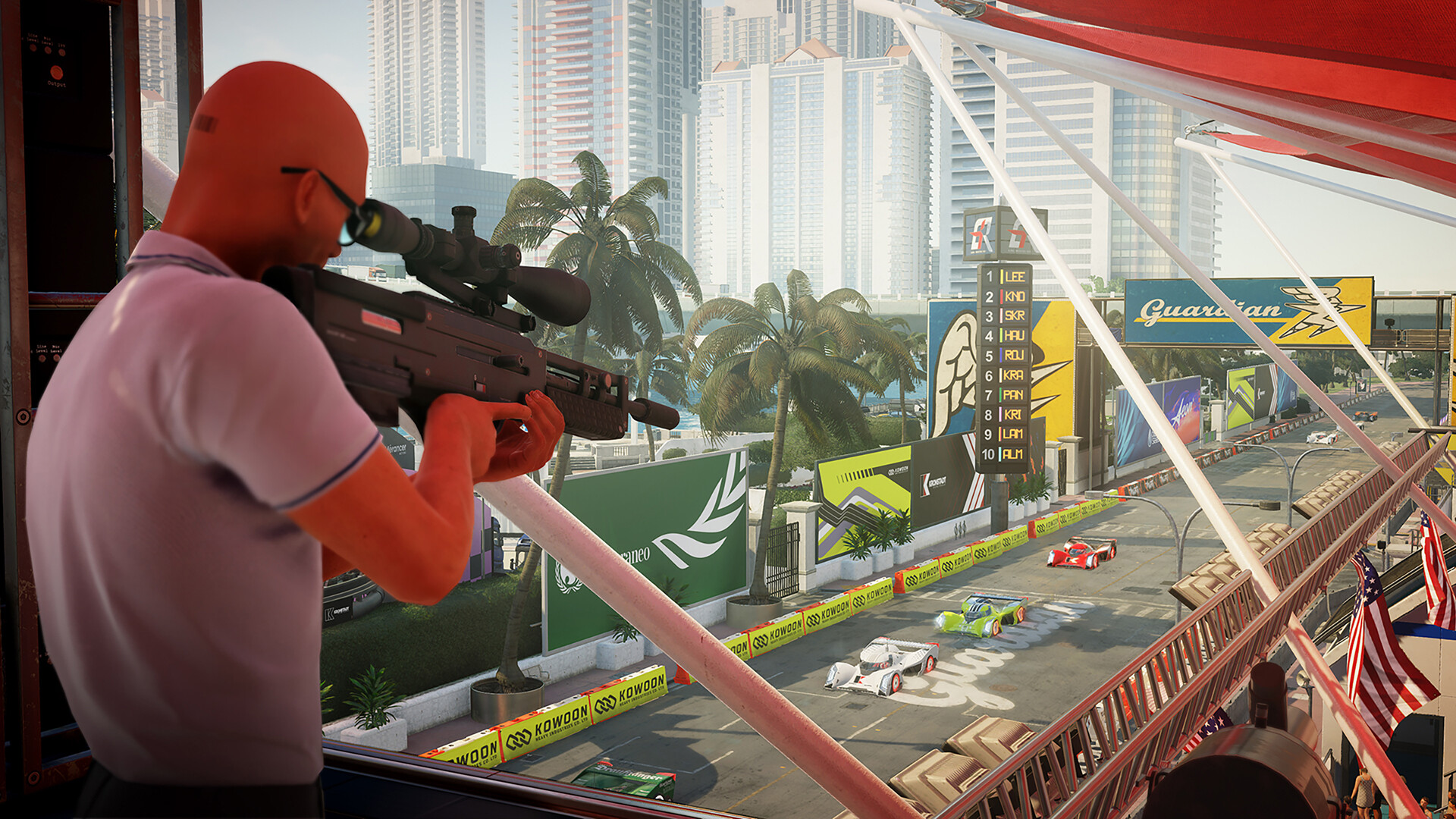
There is a version of Agent 47 who is basically a spreadsheet with a barcode tattoo. He exists in the heads of players who have memorized every patrol route in Sapienza, who can clear a Miami racetrack contract in under four minutes without a single witness. That version of the game — tight, mechanical, almost silent — is fully available in HITMAN World of Assassination. But it shares a body with something stranger: a game that occasionally wants you to dress as a flamingo, poison a croissant, and drown a celebrity chef in a fish tank. Both versions are canon. That tension is the whole appeal.
IO Interactive&#folio-qpuh-gsnf;s decision to bundle the full trilogy — HITMAN 2016, HITMAN 2, and HITMAN 3 — into a single product is one of those ideas that sounds obvious in retrospect but took years to actually happen. The result is absurdly large. Forty-seven locations is not a typo. And yet the game does not feel bloated in the way that open-world titles do when they mistake acreage for content, because the design unit here is always the mission, never the map. Each sandbox is a closed system. You learn it. You break it. You move on, or you don&#folio-qpuh-gsnf;t.
The Architecture of a Good Kill
At its core, HITMAN is a puzzle game wearing a thriller&#folio-qpuh-gsnf;s coat. Each mission presents two or more targets and an environment populated with NPCs who have routines, relationships, and blind spots. The game doesn&#folio-qpuh-gsnf;t tell you to do anything in particular. You are handed a starting point, a disguise, and the implicit challenge: figure out how this place works, then use that knowledge to do something improbable. The level design is dense in a way that rewards observation — overhearing a conversation opens an opportunity, following a staff member reveals a shortcut, reading a document reroutes the whole plan.
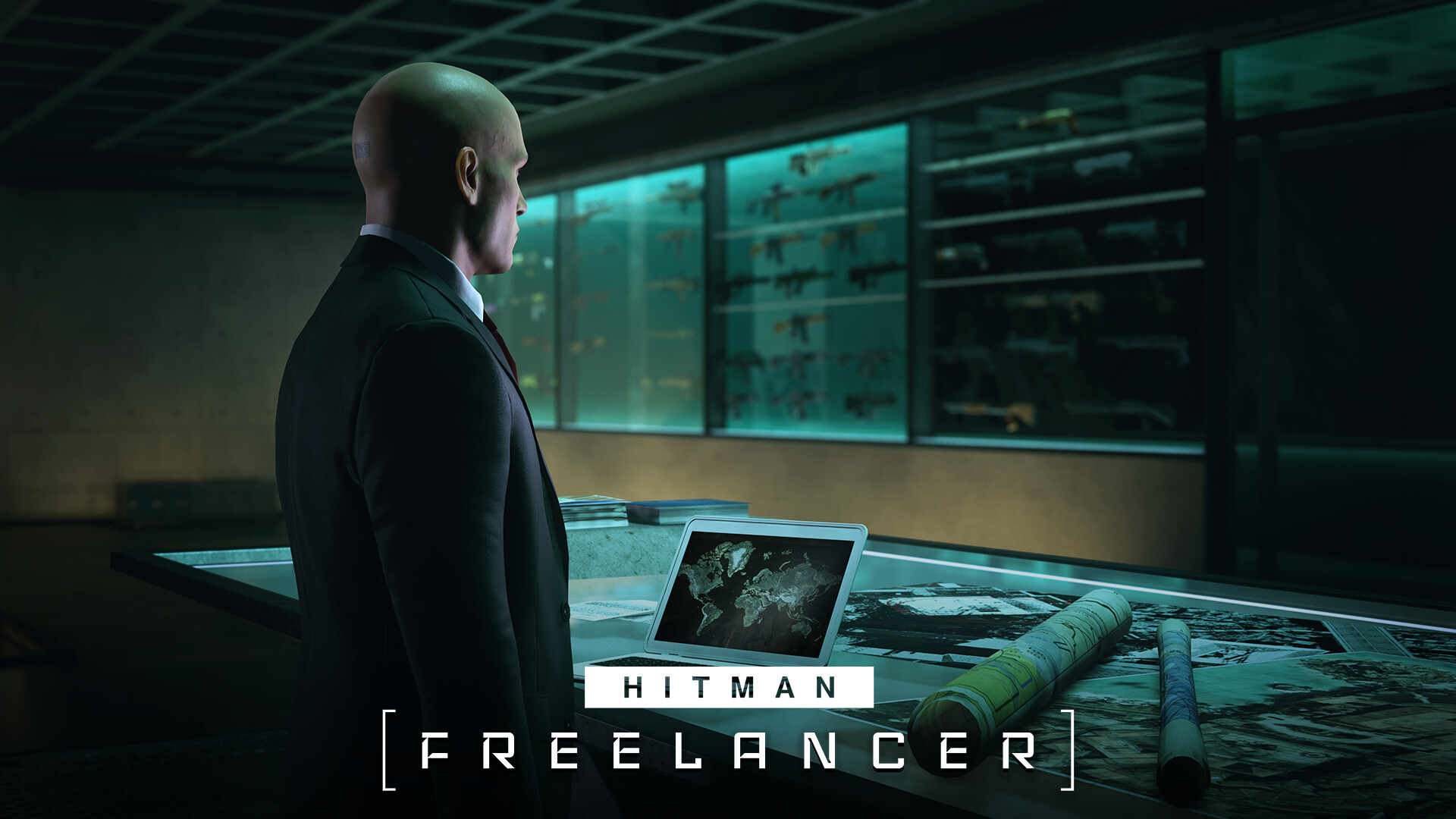 Scene from HITMAN World of Assassination.
The "Opportunities" system, which highlights optional story threads that guide you toward a kill method, is genuinely well-calibrated for new players without being condescending to returning ones. You can turn it off. With it on, the game surfaces things like: a target who can be lured to a private location if you intercept their assistant, or a prop malfunction that can be staged as an accident. With it off, you notice the same information is still in the world — you just have to find it yourself. That layering is quietly sophisticated design.
What the system does less well is communicate failure states. Getting spotted mid-execution can unravel a run in ways that feel arbitrary the first time, before you understand the suspicion logic. The enforcement radius of disguises varies by location and isn&#folio-qpuh-gsnf;t always telegraphed cleanly. Early sessions involve a lot of loading screens as you parse what, exactly, a hotel security guard can see through a glass partition. It smooths out — the game does teach you — but the onboarding assumes a patience that not every player brings.
Locations That Actually Differ
The trilogy spans environments that are recognizably distinct as gameplay spaces, not just aesthetically distinct as postcards. The sprawling coastal mission in Sapienza, for instance, gives you a picturesque Italian town layered vertically — rooftops, catacomb tunnels, a cliffside mansion — so that the same patrol can be circumvented five different ways depending on your elevation. The Mumbai mission distributes three targets across a dense urban grid, forcing you to balance timing and geography in a way that Sapienza&#folio-qpuh-gsnf;s more contained layout doesn&#folio-qpuh-gsnf;t require. These aren&#folio-qpuh-gsnf;t just reskins. The structure of each map implies a different play style.
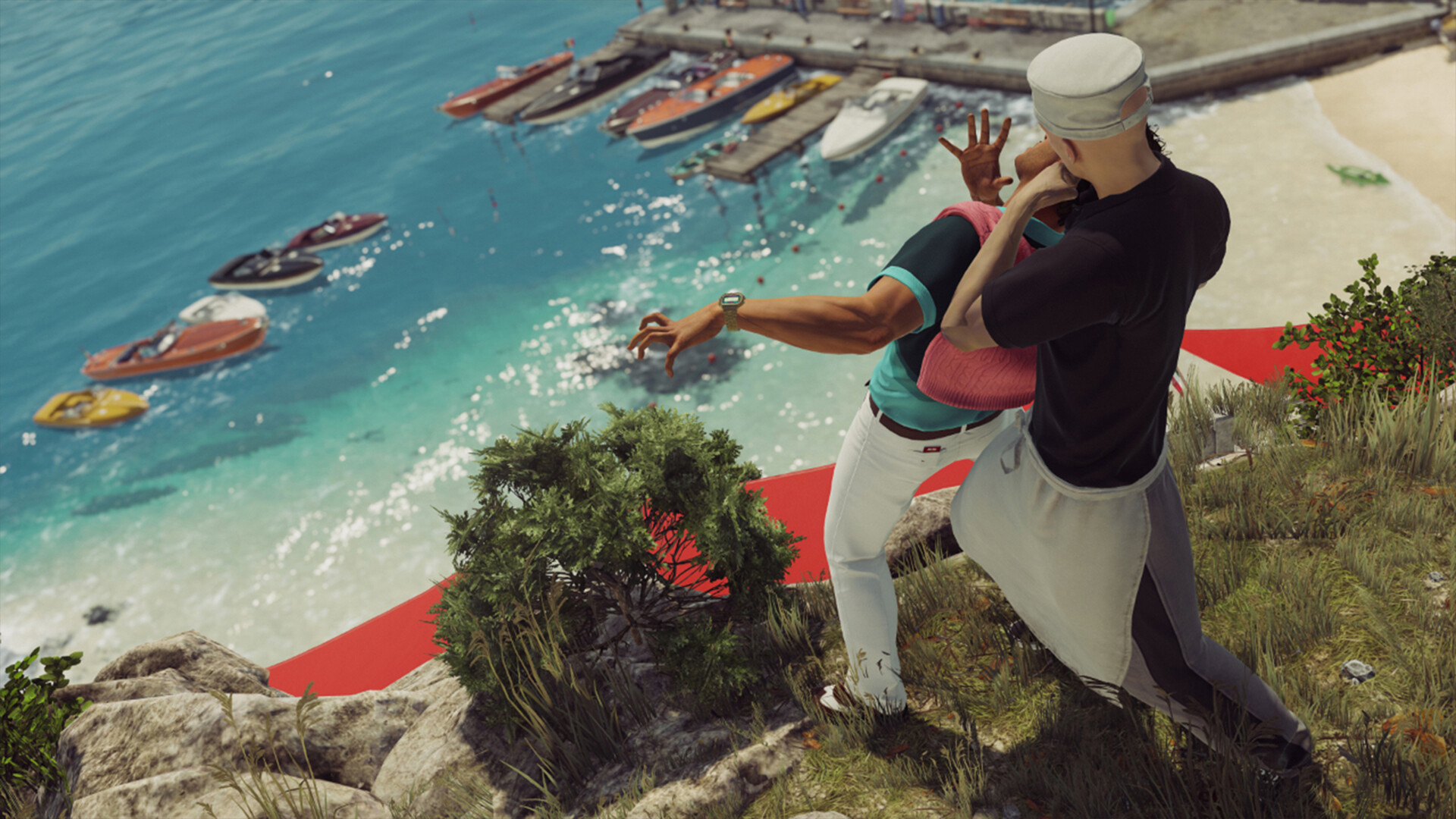 Scene from HITMAN World of Assassination.
Later locations in the HITMAN 3 section lean harder into mood. There&#folio-qpuh-gsnf;s a gothic manor mission that functions almost as a locked-room mystery, with a method of eliminating the target that is genuinely surprising the first time you discover it. A late-game mission set in a facility that&#folio-qpuh-gsnf;s largely empty by design creates a different kind of tension — the absence of crowd cover changes how 47 moves, and the game knows it. IO uses scale and population density as actual mechanical variables, which keeps the location roster from feeling like set dressing.
Replayability as a Feature, Not a Promise
Most games describe replayability as a selling point while quietly hoping you don&#folio-qpuh-gsnf;t notice it&#folio-qpuh-gsnf;s thin. HITMAN is one of the few that actually builds for it structurally. The Mastery system, which unlocks new starting locations, disguises, and item placements as you earn XP in each mission, directly incentivizes repeat runs by changing the conditions of the sandbox itself. Your second run through a location often begins in a fundamentally different position than your first — backstage instead of the front gate, inside instead of outside — which can collapse the puzzle in ways that feel like genuine discovery.
Escalations and Elusive Target Arcade missions add structured challenge on top of the base levels. Escalations layer conditions onto a map — eliminate this target, don&#folio-qpuh-gsnf;t change your disguise, don&#folio-qpuh-gsnf;t be spotted — that force you to solve a version of the puzzle you&#folio-qpuh-gsnf;ve never encountered. They&#folio-qpuh-gsnf;re not always elegantly balanced; some escalation conditions feel like they were generated by a creative team doing a particularly mean improv exercise. But they work, and they extend the life of individual missions considerably.
The Ghost Mode absence is still felt by players who remember it from HITMAN 2, and the overall suite of competitive options is thinner than it could be. That said, the asynchronous Contracts mode — where players design and share their own hit lists — fills some of that space. It&#folio-qpuh-gsnf;s community-dependent in a way that relies on the game maintaining an active playerbase, which, three years into this package&#folio-qpuh-gsnf;s existence, seems safe but not guaranteed.
About: Present, Serviceable, Occasionally Unhinged
The narrative threading through all three games is exactly as serious as it needs to be, which is to say: not very. The overarching plot involves shadowy global organizations, genetic engineering, and a handler named Diana Burnwood who delivers mission briefings with a composure that implies she has accepted the absurdity of her employment. It functions as context, not as drama. You don&#folio-qpuh-gsnf;t play HITMAN for the story the way you play Disco Elysium for the story. You play for the moment a plan collapses and you have to improvise, and the story is the frame that makes each level&#folio-qpuh-gsnf;s setup feel purposeful.
HITMAN 3&#folio-qpuh-gsnf;s finale makes a genuine effort at emotional resonance — more so than the prior two entries — and partially earns it, though it arrives with a weight the preceding thirty-odd hours haven&#folio-qpuh-gsnf;t quite built toward. Whether that lands likely depends on how many side missions you&#folio-qpuh-gsnf;ve treated as pure gameplay and how many you&#folio-qpuh-gsnf;ve read as character texture. For what it&#folio-qpuh-gsnf;s worth, the writing in the mission stories is often sharper than the main plot; the game&#folio-qpuh-gsnf;s sense of humor operates best in the small scripts, not the grand arcs.
Performance and the Package as a Whole
Across current-generation hardware, the game runs well. Load times are manageable, the frame rate is stable in dense crowd areas that would have punished older systems, and IO has kept the title updated consistently enough that the version of World of Assassination available today is noticeably more polished than the launch-window product. It doesn&#folio-qpuh-gsnf;t push graphical boundaries — some character models and animations show their age — but the art direction in the environments is strong enough that technical shortcomings rarely pull you out of the experience.
Pricing the full package against its component parts has historically been a point of confusion for the series, and IO has cycled through enough pricing tiers and edition structures that it&#folio-qpuh-gsnf;s worth checking the current storefront state before purchasing. The content itself justifies a generous price in almost any configuration — the question is just whether you&#folio-qpuh-gsnf;re buying redundant access to something you already own.
Who This Is For, and Who It Will Lose
Players who come to this expecting a third-person action game in the Splinter Cell sense will be confused, possibly annoyed. Agent 47 is not built for firefights; putting him in one typically means the run is already over. The control scheme and camera exist to serve a design where violence is a last resort and patience is a core mechanic. If that sounds like a description of a game you&#folio-qpuh-gsnf;d like, you&#folio-qpuh-gsnf;re correct.
There&#folio-qpuh-gsnf;s a narrower argument that HITMAN World of Assassination is simply the best game in its specific genre — the social stealth puzzle box — and that genre hasn&#folio-qpuh-gsnf;t been meaningfully contested by another developer in years. Splinter Cell went quiet. Dishonored wound down after Death of the Outsider. Nothing else is doing quite what IO is doing here at this scale, with this degree of mechanical consistency. Whether that makes the game essential or just the tallest person in a small room is a genuine question. My read is that it&#folio-qpuh-gsnf;s both, and that the distinction matters less than the forty-seven chances to find out.
Editorial scoring
Reader Q&A
How long does it take to finish 47 in One World, and Every Kill Feels Like the First?
Main story runs around 60 hours depending on how thoroughly you explore. Completionists can spend 2-3× that.
Is 47 in One World, and Every Kill Feels Like the First good for newcomers to Stealth Sandbox?
It depends. The systems are deep but the tutorial does a fair job. Veterans of Stealth Sandbox will feel at home faster.
Which platform should I play 47 in One World, and Every Kill Feels Like the First on?
Steam Deck handles this title well — verified compatibility on most recent patches.
Was 47 in One World, and Every Kill Feels Like the First worth the launch-day price?
If you&#folio-qpuh-gsnf;re a fan of IO Interactive, yes. If you&#folio-qpuh-gsnf;re new to the studio, a sale price is more comfortable.
Are there DLCs or expansions worth picking up?
The base game is complete; expansion DLC adds 10-15 hours of additional content if you want more.
What did IO Interactive get right (and what could be better)?
IO Interactive nailed the moment-to-moment loop and the world-building. Pacing in the mid-game and inventory UX have room for improvement.