Helldivers 2 Is Stupidly Fun Until It Isn&#folio-qpuh-gsnf;t — Then It&#folio-qpuh-gsnf;s Funnier
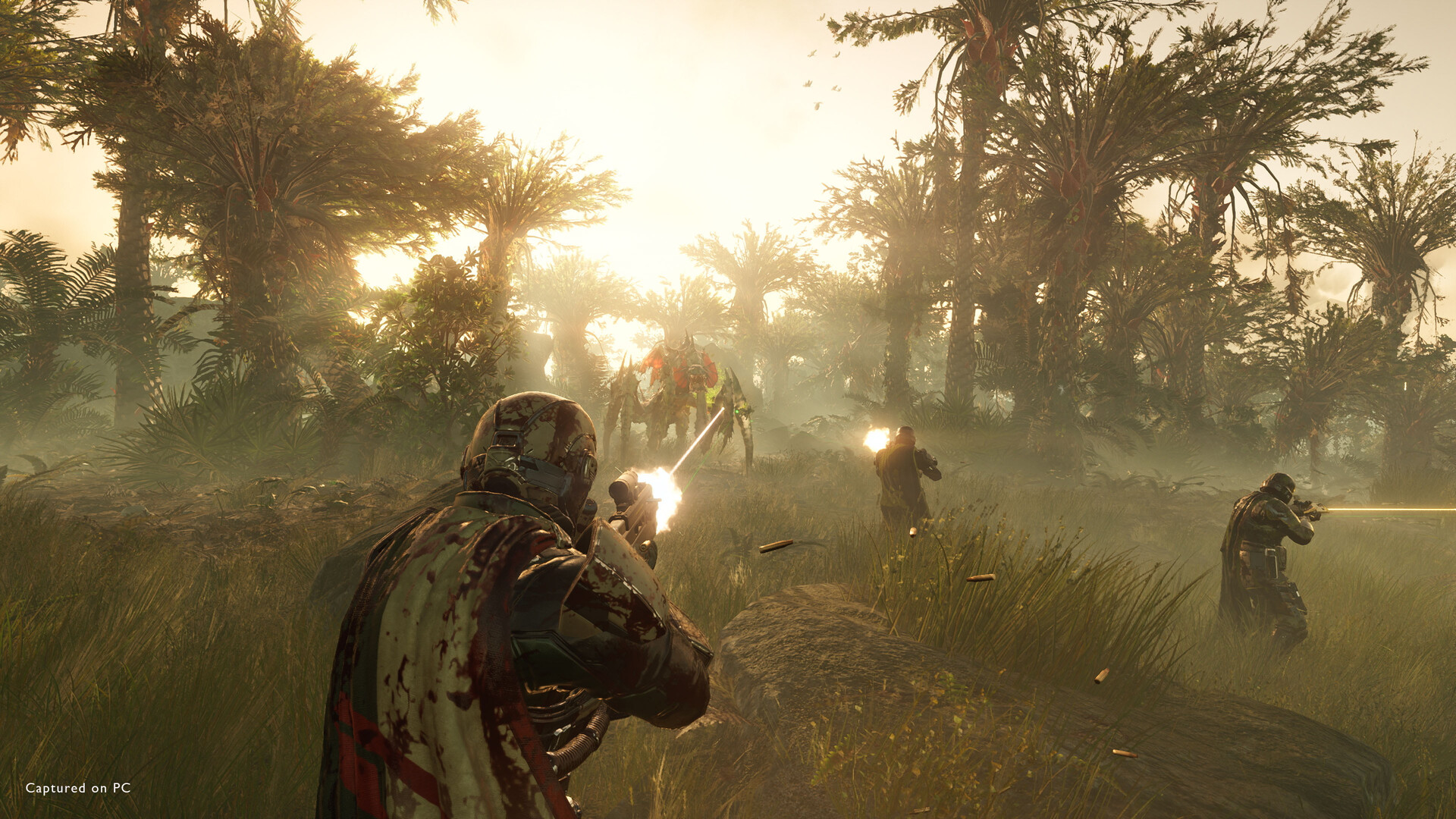
There is a specific kind of joy that Helldivers 2 produces — the kind where you&#folio-qpuh-gsnf;re supposed to be completing an objective, but instead you&#folio-qpuh-gsnf;re watching your teammate get launched thirty meters into the air by a badly placed Hellbomb, and everyone in the squad goes quiet for two full seconds before the laughter starts. Arrowhead Game Preview Rooms built something genuinely funny in the mechanical sense, not just in the writing-on-a-loading-screen sense. The comedy emerges from the design itself.
That&#folio-qpuh-gsnf;s the generous read, and it&#folio-qpuh-gsnf;s also the accurate one. But there&#folio-qpuh-gsnf;s a less generous read sitting right next to it, and both are true at the same time. Helldivers 2 is a third-person co-op shooter about waging a democratically mandated war across procedurally generated alien planets, and it ranges from being the most fun you&#folio-qpuh-gsnf;ll have in multiplayer this year to being a quietly frustrating exercise in systems that resist explanation. Where you land on it probably depends less on how much you like games and more on how much you like games that occasionally argue with you.
The Loop That Hooks You
The core mission structure is simple: drop onto a hostile planet, complete a series of objectives under a time limit, and extract. The stratagem system — a directional-input mechanic that lets you call in support items, orbital strikes, and automated turrets — is where most of the session-to-session texture lives. You&#folio-qpuh-gsnf;re pressing down-left-up-right under fire to request a cluster of 500-kilogram bombs, and the manual input requirement means you will occasionally misfire at the worst possible moment. That&#folio-qpuh-gsnf;s not a bug in the design. That&#folio-qpuh-gsnf;s the design.
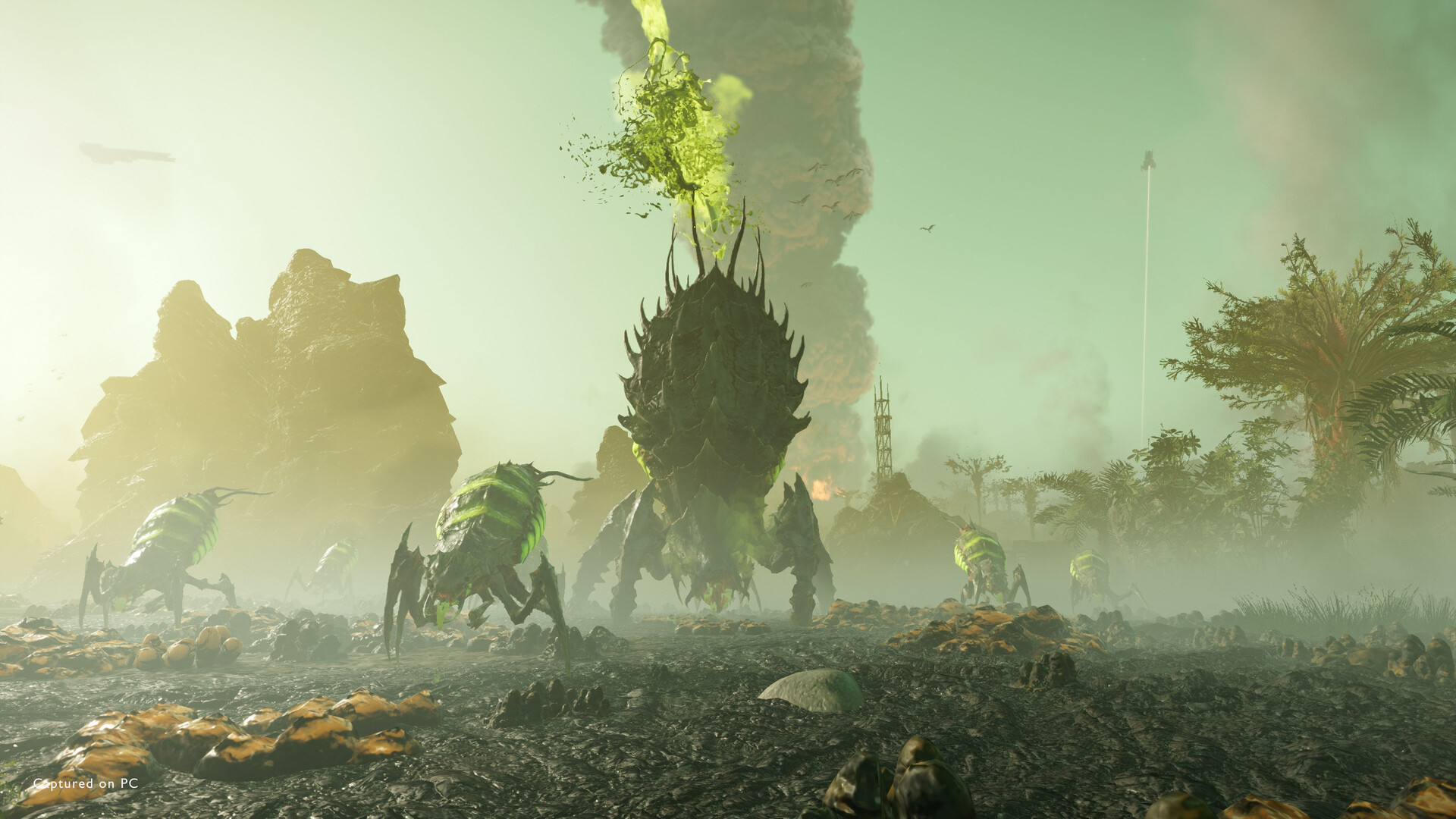 Scene from Helldivers 2.
Weapons have a tactile weight that a lot of shooters claim and few deliver. The recoil patterns, the reload animations, the way a Railgun shot needs to be charged and will kill you if you overcharge it — these aren&#folio-qpuh-gsnf;t cosmetic details. They&#folio-qpuh-gsnf;re the substance of how fights feel. Arrowhead clearly spent time on the kinesthetics, and that investment shows. Even the basic Liberator assault rifle has enough kick to make you think about positioning.
Difficulty scales across a wide range, from levels that border on tourist mode to ones that demand real coordination. The higher difficulties don&#folio-qpuh-gsnf;t just increase enemy health; they change spawn behavior, enemy type distribution, and patrol frequency. It&#folio-qpuh-gsnf;s a meaningful escalation rather than a number inflation, which is rarer than it should be.
The Part Where Friendly Fire Is a Feature, Not a Warning
Friendly fire is always on, with no option to disable it. Orbital barrages will kill your teammates. So will your own grenades, your own turrets, your own misfired stratagems. Early on, this feels punishing. By hour three it feels like the point. The game is asking you to manage lethal chaos cooperatively, not to eliminate danger but to share it gracefully, and that shifts the social dynamic of playing with strangers into something surprisingly generous. You get killed, you laugh, you reinforce each other, you move on.
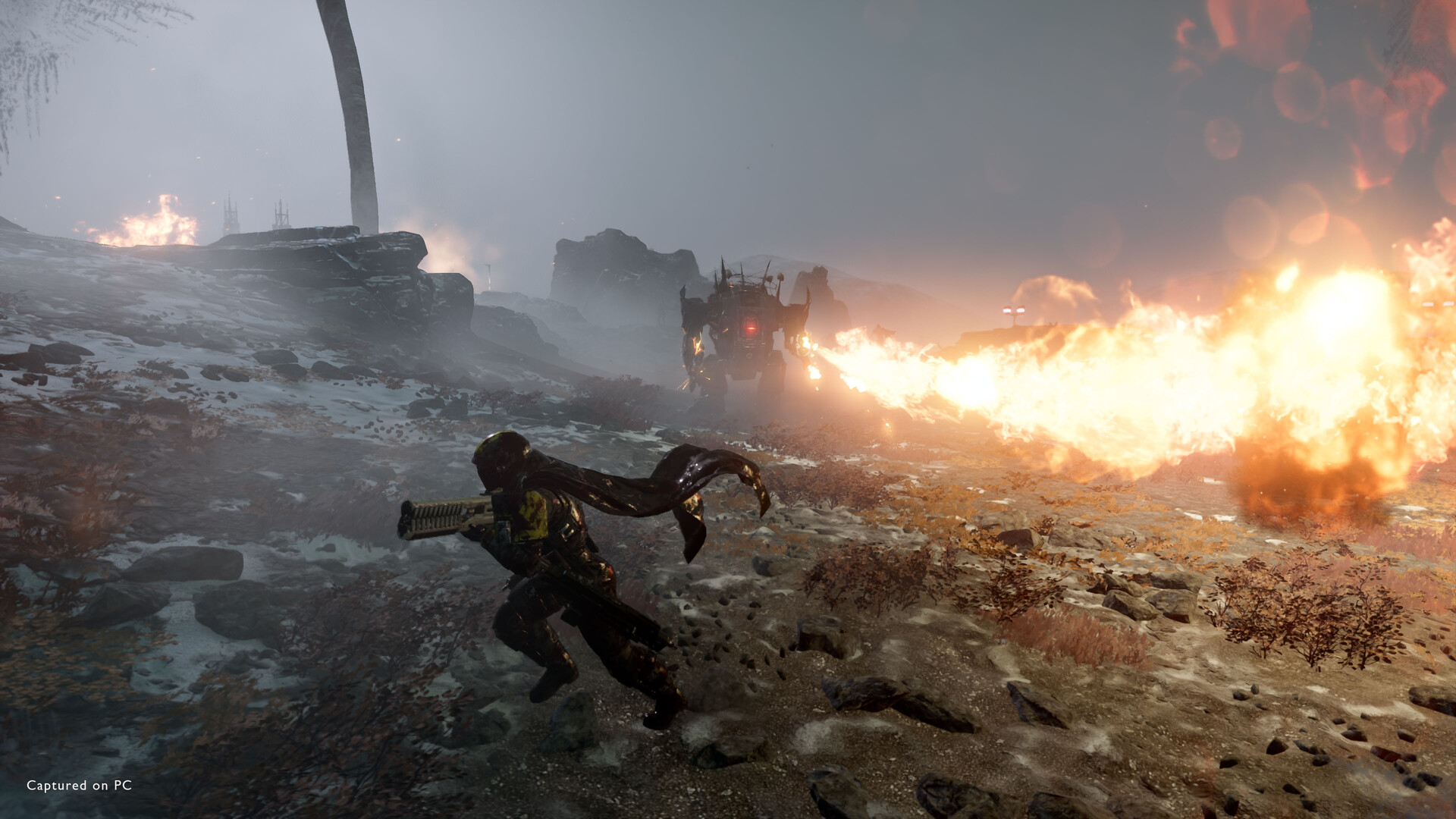 Scene from Helldivers 2.
This is where Helldivers 2 separates itself from games that treat co-op as a multiplier applied to a single-player experience. The design is fundamentally social in a way that doesn&#folio-qpuh-gsnf;t require voice chat to function. Body language through movement, the timing of a stratagem call, the choice to run back and revive someone instead of pushing the extraction — these are all communicative acts. It&#folio-qpuh-gsnf;s closer to how Deep Rock Galactic operates than how a Borderlands entry would.
The Galaxy Map and the Question of Whether Anyone Explains It to You
Here&#folio-qpuh-gsnf;s where the affection starts to get qualified. The broader metagame — the ongoing galactic war where the entire player base is meant to collectively push or defend planetary fronts — is genuinely interesting as a concept and genuinely opaque as an experience. The game surfaces almost none of its logic to you directly. You can tell that the community effort matters, that playing on certain contested planets contributes to a shared progress bar, but the underlying mechanics of how that translates to outcomes are not explained in any structured way.
For players who seek out community wikis, subreddits, and third-party trackers, this becomes part of the appeal — an unfolding live story with real stakes. For players who prefer games that teach their own systems, it reads as a gap. Neither reading is wrong. But it&#folio-qpuh-gsnf;s worth naming the tradeoff rather than pretending the opacity is universally charming.
The progression system has a similar texture. Unlocking weapons, stratagems, and armor through Warbonds — the in-game rotating content passes — involves a currency acquired through play. The items are cosmetic or functional, the grind is moderate rather than punishing, and nothing particularly important is locked behind a time gate. That&#folio-qpuh-gsnf;s a reasonable live-service implementation by current standards. It&#folio-qpuh-gsnf;s still a live-service implementation, and some players will find the layered currencies and unlockable tiers taxing even if they&#folio-qpuh-gsnf;re not aggressive.
What the Enemies Are Actually Doing
The two primary factions — the insectoid Terminids and the robotic Automatons — aren&#folio-qpuh-gsnf;t just reskins of each other, which is more praise than it sounds like. Terminids reward suppressive fire, weak-point targeting, and a certain willingness to run. Automatons punish recklessness more directly and favor cover use. Playing against each requires different stratagem loadouts, different movement habits, different priorities. The design work is there.
The Charger enemy type, a fast-moving armored Terminid that can one-shot a poorly positioned player, is both one of the best and most contentious designs in the game. It forces adaptation. It also, at higher difficulties with multiple Chargers active simultaneously, can produce situations that feel less like a design challenge and more like a pacing mistake — especially when you&#folio-qpuh-gsnf;re already managing a breach event and trying to hit an objective timer. Whether that reads as tension or tedium depends partly on your squad and partly on your patience that particular evening.
The Technical Stuff, Briefly and Honestly
At launch, Helldivers 2 had server capacity problems — well documented, widely reported, eventually addressed. The matchmaking is functional now, though the lobby system still feels more provisional than polished. Joining a game in progress works, but the flow of it isn&#folio-qpuh-gsnf;t smooth. You&#folio-qpuh-gsnf;ll occasionally spawn into a mission that&#folio-qpuh-gsnf;s thirty seconds from extraction having contributed nothing, or get booted mid-mission because the host&#folio-qpuh-gsnf;s connection dropped.
Performance on PC varies more than it should for a game at this price point. The visuals are striking — planetary environments have real visual identity, particularly in the lighting — but the optimization has been inconsistent depending on hardware configuration. Arrowhead has patched steadily, and the situation has improved. It&#folio-qpuh-gsnf;s still not seamless.
So What Is It, Actually
Helldivers 2 is the kind of game that reveals something about what you want from multiplayer. If what you want is systemic richness explained through play, a community that participates in a rolling live narrative, and a core loop tight enough to sustain dozens of hours of repetition — it&#folio-qpuh-gsnf;s exceptional. If you want clarity, polish, and a game that respects your time by making its own rules legible, the edges will bother you more than the center will impress you.
What Arrowhead got right is fundamental: the shooting is good, the co-op design is thoughtful, and the game produces stories instead of just sessions. Those things matter more than a tidy UI or a readable metagame, and they&#folio-qpuh-gsnf;re harder to fix if you get them wrong. A confusing Warbond menu is a patch. Making a game feel alive when you&#folio-qpuh-gsnf;re playing it with other people is not something you can patch in.
The rough edges are real. The stratagem misfire that kills your teammate, the Charger spawn that breaks a run, the galaxy map that trusts community documentation more than in-game clarity — these aren&#folio-qpuh-gsnf;t illusions. But somehow they&#folio-qpuh-gsnf;re also part of why the game earns its reputation rather than just accumulating one. It&#folio-qpuh-gsnf;s a harder sell than it should be, and a better game than the roughness suggests.
Editorial scoring
Reader Q&A
How long does it take to finish Helldivers 2 Is Stupidly Fun Until It Isn&#folio-qpuh-gsnf;t — Then It&#folio-qpuh-gsnf;s Funnier?
Main story runs around 32 hours depending on how thoroughly you explore. Completionists can spend 2-3× that.
Is Helldivers 2 Is Stupidly Fun Until It Isn&#folio-qpuh-gsnf;t — Then It&#folio-qpuh-gsnf;s Funnier good for newcomers to Co-op Shooter?
Yes — Helldivers 2 Is Stupidly Fun Until It Isn&#folio-qpuh-gsnf;t — Then It&#folio-qpuh-gsnf;s Funnier is a great entry point. The early hours teach the systems gradually and the difficulty curve is reasonable.
Which platform should I play Helldivers 2 Is Stupidly Fun Until It Isn&#folio-qpuh-gsnf;t — Then It&#folio-qpuh-gsnf;s Funnier on?
PC version offers the highest fidelity if your rig can handle it. Console versions are polished out of the box.
Was Helldivers 2 Is Stupidly Fun Until It Isn&#folio-qpuh-gsnf;t — Then It&#folio-qpuh-gsnf;s Funnier worth the launch-day price?
Depends on backlog. The replay value justifies the price for genre fans; casual players should wait for a 40%+ discount.
Are there DLCs or expansions worth picking up?
The base game is complete; expansion DLC adds 10-15 hours of additional content if you want more.
What did Arrowhead Game Preview Rooms get right (and what could be better)?
Strongest: art direction, audio design, set-piece variety. Weakest: late-game balance and a few persistent quest-log bugs.