Final Fantasy XVI Trades Its Past for a Sword Fight
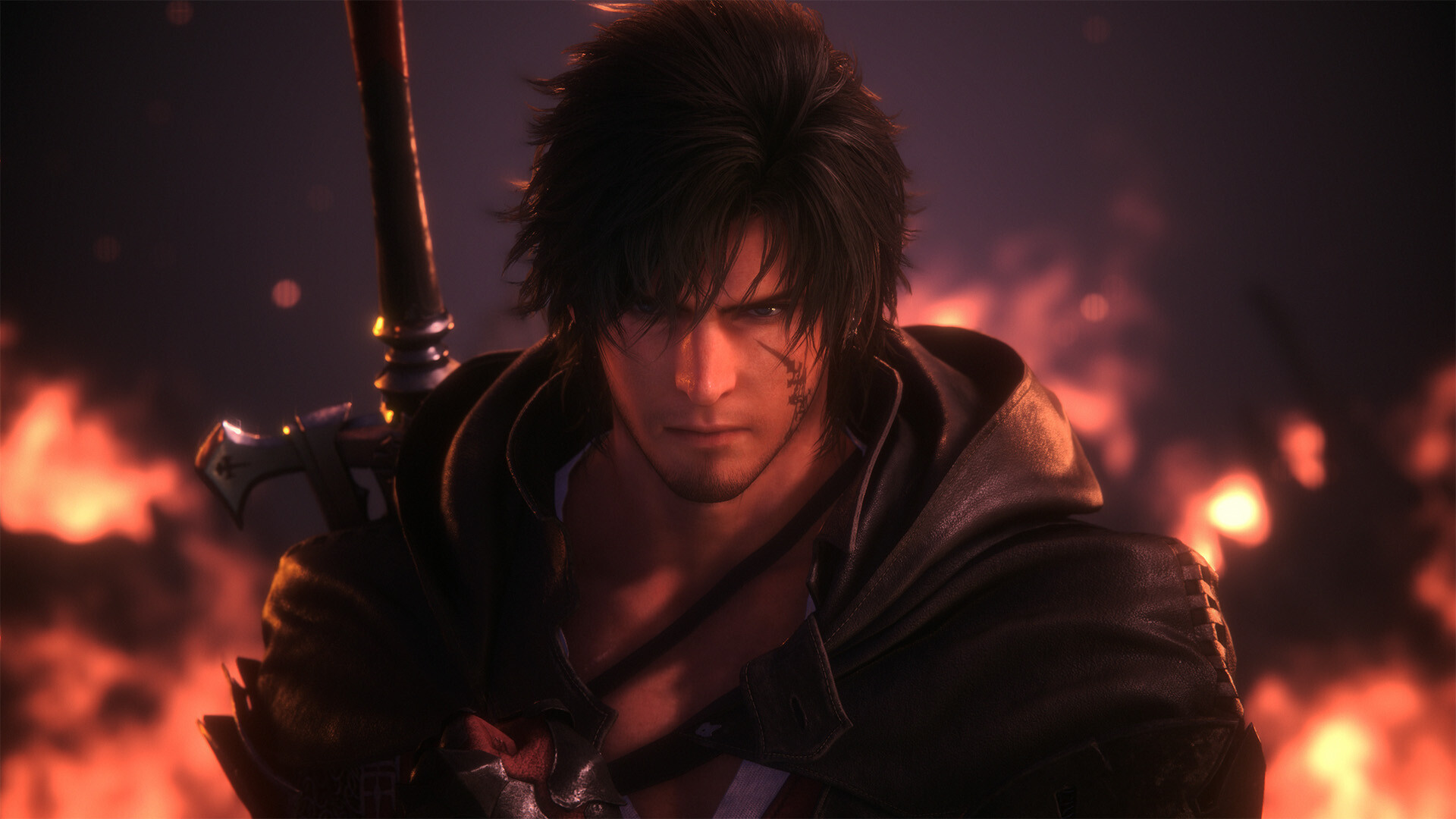
Square Enix has spent the better part of a decade slowly backing away from what Final Fantasy used to be. Turn-based combat, party management, a cast of five or six companions with distinct roles — gone, or softened into something more palatable to a market that apparently needs every major release to feel like an action game. Final Fantasy XVI is the most aggressive step in that direction yet. It drops the pretense entirely. This is a character action game with RPG trimmings, and the sooner you make peace with that, the easier it is to assess what it actually does well.
Clive Rosfield is a better protagonist than the game sometimes deserves. He carries a believable exhaustion — not the performative brooding of Lightning or the blank-slate quality of XVI&#folio-qpuh-gsnf;s own early trailers — and the voice work from Ben Starr does serious lifting throughout. The world he inhabits, Valisthea, is a continent-spanning political mess involving warring nations, enslaved magic users called Bearers, and enormous crystalline structures slowly poisoning the land. It is, on paper, the most mature Final Fantasy has attempted. In practice, it is also one of the most uneven.
Combat That Has One Good Idea and Leans on It Hard
The core fighting system is built around Eikonic abilities — powers borrowed from summons like Ifrit, Garuda, and Ramuh — slotted into a loadout Clive can swap between mid-fight. At its best, this produces something genuinely kinetic. Chaining a Garuda pull into a Titan counter into an Ifrit charge has a satisfying internal logic, and the game rewards players who build combinations rather than just button-mashing the most damaging single ability. Devil May Cry 5&#folio-qpuh-gsnf;s combat director Ryota Suzuki worked on XVI, and that influence is legible in how the stagger system functions: weaken the enemy enough and you get a window to deal amplified damage, which encourages patience alongside aggression.
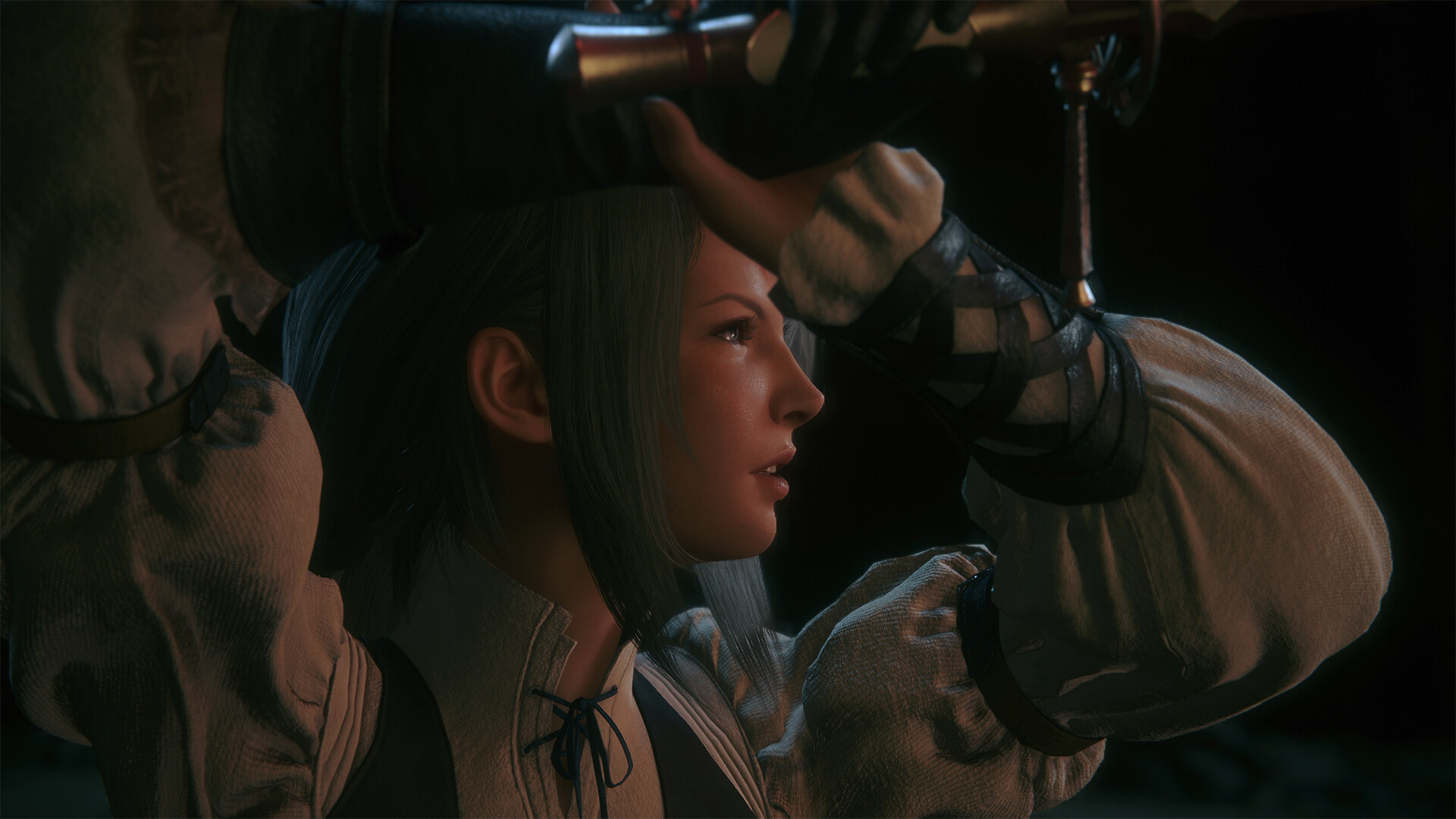 Scene from Final Fantasy XVI.
Where it starts to fray is in the enemy design. Standard encounters rarely ask much of you. Most of the mid-game fodder can be handled with a single preferred Eikon setup, and the game does not do enough to disrupt that comfort. Elden Ring, to use the obvious contrast, forces you to adapt not because it locks abilities but because it varies attack patterns and spacing in ways that punish repetition. XVI mostly does not. You find what works around hour eight and run it until the credits. The Eikon-versus-Eikon boss sequences — large-scale cinematic clashes between summoned entities — are spectacular to watch the first time and mechanically thin enough that they would embarrass a PlayStation 2 title.
Accessories that simplify combat further (auto-dodge, auto-attack timing) are marketed as accessibility options, but their existence quietly signals that the developers knew the system had a ceiling. That is not a damning indictment — it is honest design — but it does suggest XVI is content to be a very good approximation of an action game rather than a great one.
The About Earns Its Dark Register, Mostly
The political storyline surrounding Bearers — humans born with magic who are branded, enslaved, and treated as subhuman by most of Valisthean society — is handled with more care than you might expect from a franchise that once resolved moral ambiguity with a friendship speech. The game does not redeem every antagonist. Some situations end badly and stay bad. There is a supporting cast member, Jill, whose early chapters set up a specific kind of trauma that XVI actually follows through on rather than resolving cheaply, which is rare enough in this genre to be worth noting.
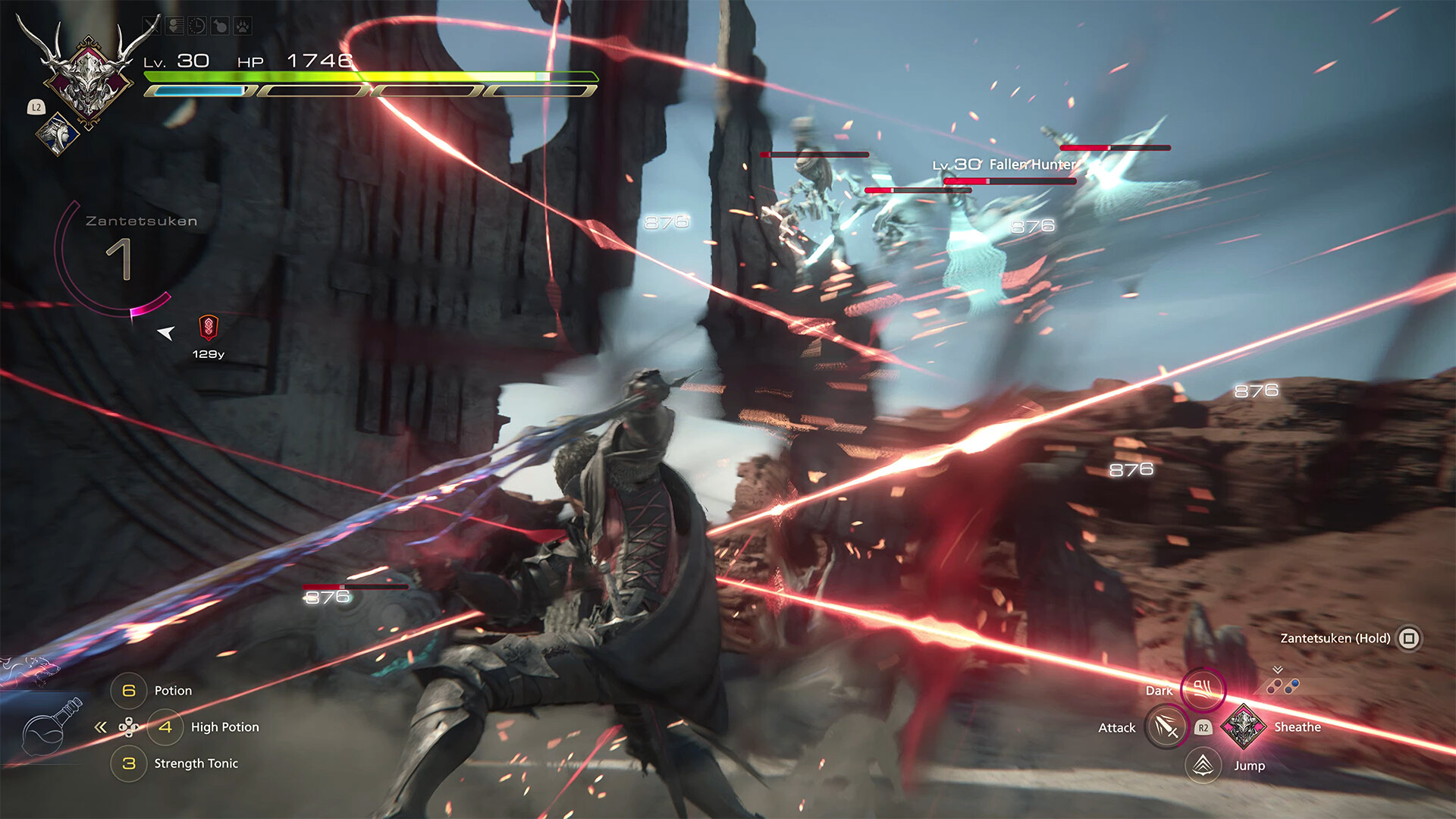 Scene from Final Fantasy XVI.
The main questline holds together. The side content is a different matter. A large portion of the optional quests are fetch-adjacent: gather reports, speak to three people in a settlement, return. Some of them do expand lore in ways that serious fans will appreciate, but their structure belongs to an older and less interesting era of quest design. Baldur&#folio-qpuh-gsnf;s Gate 3, released the same year, demonstrated that side quests can carry dramatic weight equal to the main story. XVI&#folio-qpuh-gsnf;s optional content sits closer to the genre average, which given the ambitions elsewhere in the game, reads as a missed opportunity.
Valisthea as a Place Versus Valisthea as a Set
The world looks extraordinary at the level of individual environments. A late-game area built around collapsed architecture and ash-grey skies is genuinely striking, and the art direction throughout carries a deliberate grimness that suits the tone. Naoki Yoshida&#folio-qpuh-gsnf;s production has money visible in every cutscene, every surface texture, every lighting pass. This is not a game that looks unfinished.
The problem is that Valisthea does not feel lived-in the way the best open or semi-open worlds manage. The hub area grows over time, which helps establish continuity, but the field zones connecting story beats are relatively sparse. You move through them efficiently because there is not much reason to slow down. Compare this to something like Xenoblade Chronicles 3, where the terrain itself suggested history and use — where stumbling across a ruin felt like finding something rather than passing through scenery. Valisthea often feels assembled for visual effect rather than habitation. That is a meaningful distinction for a genre where exploration is supposed to carry its own reward.
The RPG Layer Is Thin, and That Is a Choice
Character progression is stripped down. You level, you upgrade equipment at a blacksmith, you slot in Eikonic abilities. There is no party to manage. No class system. No branching skill tree with meaningful tradeoffs. For players who came specifically for the action combat, none of this is a problem. For the portion of Final Fantasy&#folio-qpuh-gsnf;s historical audience that associates the series with systemic complexity, XVI offers almost nothing. This is not a stealth omission. Square Enix made the call explicitly and publicly, and the game follows through on it.
What XVI proves is that a stripped RPG layer is sustainable when the combat depth compensates — and here, the compensation is partial. The game&#folio-qpuh-gsnf;s mechanical vocabulary is wide enough to create memorable boss encounters and satisfying ability combos, but not deep enough to sustain extended engagement with its own systems. By the back half, progression feels more like maintenance than discovery. You are not building toward something; you are equipping marginally better versions of the same sword.
Where It Lands
Masayoshi Soken&#folio-qpuh-gsnf;s score deserves a sentence on its own. It is exceptional. The main theme, the battle arrangements, the quieter character moments — all of it works in a way that suggests someone was given serious freedom and used it well. That quality of craft shows up across the production in ways that make XVI&#folio-qpuh-gsnf;s structural problems more frustrating, not less. You can feel what it was trying to be.
Final Fantasy XVI is a competent and often compelling action game wearing a franchise name that carries specific expectations. It satisfies some of those expectations — scope, visual ambition, a story willing to go uncomfortable places — and discards others entirely. Whether that exchange works depends on what you came for. Players who bounced off Final Fantasy XV&#folio-qpuh-gsnf;s road-trip framing and wanted something more purposeful will likely find this easier to respect. Players who miss the mechanical depth of Final Fantasy XII or the party-building of Final Fantasy X will not find it here, and the game makes no apology for that.
It is not the reinvention Square Enix described in its promotional material, and it is not the betrayal that corners of the fanbase declared on release day. It is a game that made a set of decisions, some of them good, some of them conservative, and shipped on schedule. That sounds like faint praise. Relative to the recent history of this franchise, it is actually closer to a quiet achievement.
Editorial scoring
Reader Q&A
How long does it take to finish Final Fantasy XVI Trades Its Past for a Sword Fight?
Main story runs around 32 hours depending on how thoroughly you explore. Completionists can spend 2-3× that.
Is Final Fantasy XVI Trades Its Past for a Sword Fight good for newcomers to Action RPG?
Yes — Final Fantasy XVI Trades Its Past for a Sword Fight is a great entry point. The early hours teach the systems gradually and the difficulty curve is reasonable.
Which platform should I play Final Fantasy XVI Trades Its Past for a Sword Fight on?
PC version offers the highest fidelity if your rig can handle it. Console versions are polished out of the box.
Was Final Fantasy XVI Trades Its Past for a Sword Fight worth the launch-day price?
Released in 2023, and as of writing it holds up. Wait for a sale if you&#folio-qpuh-gsnf;re price-sensitive — major discounts arrive within 6 months.
Are there DLCs or expansions worth picking up?
Wait for the Game of the Year edition — it bundles everything at a fair discount.
What did Square Enix get right (and what could be better)?
Square Enix nailed the moment-to-moment loop and the world-building. Pacing in the mid-game and inventory UX have room for improvement.