Disco Elysium Let Me Be the Worst Version of Myself
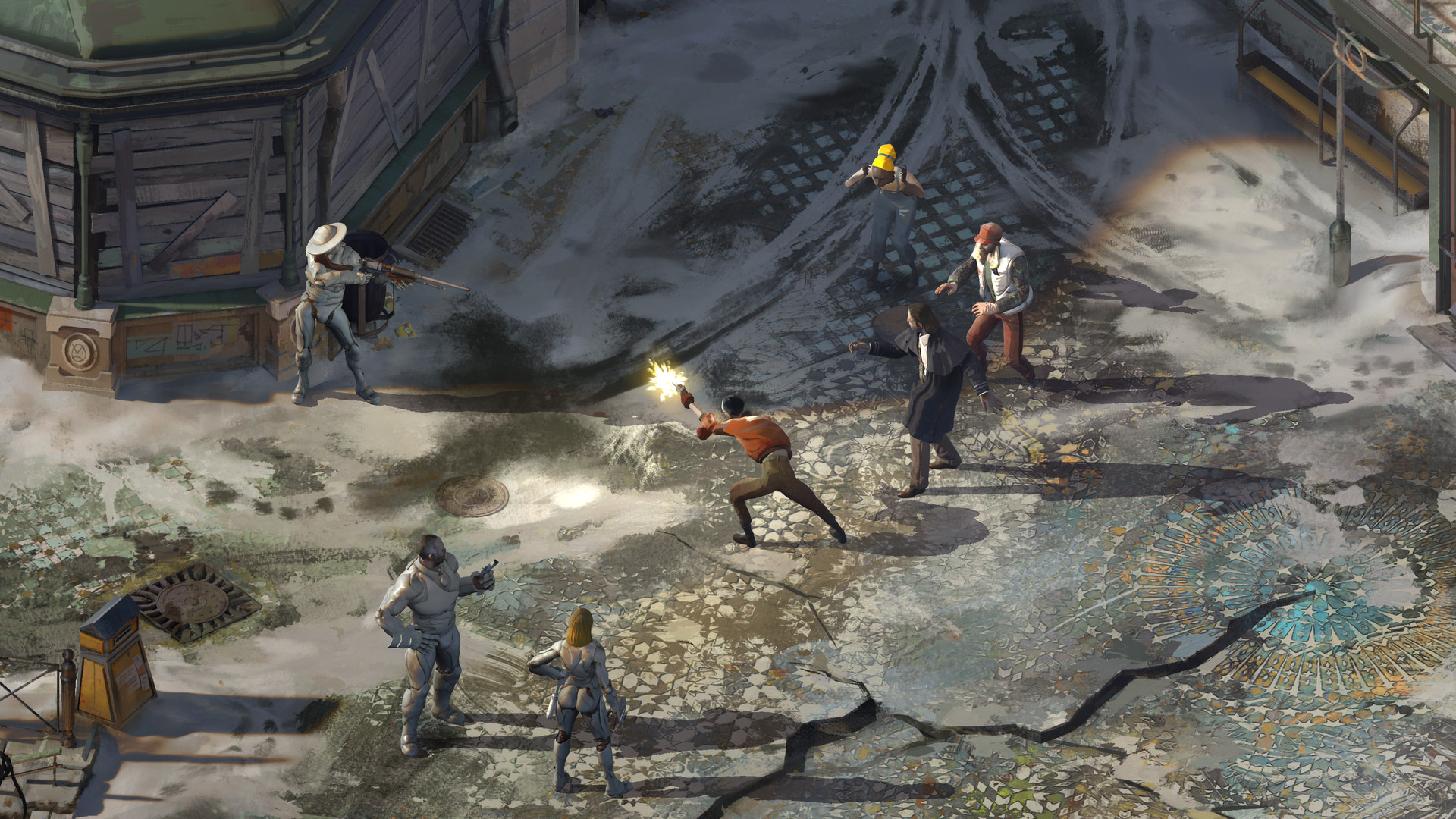
Disco Elysium hands you a detective with no memory, no credibility, and a necktie he apparently tried to hang himself with at some point before the game began. You are asked to solve a murder. You will probably spend the first several hours doing almost anything else. That sounds like chaos. It is, mostly. It is also one of the more singular experiences the RPG genre has produced in years.
ZA/UM&#folio-qpuh-gsnf;s 2019 release — expanded in the Final Cut edition with full voice acting — is the kind of game that resists clean summary. It is a written work as much as a designed one, built on a political novel&#folio-qpuh-gsnf;s worth of prose and a skill system that essentially externalises the voices inside your protagonist&#folio-qpuh-gsnf;s collapsing psyche. Whether all of that holds together depends significantly on your patience for failure, for ideology, and for a fictional city called Revachol that really wants to talk to you about its feelings.
The Skill System Is the Whole Game
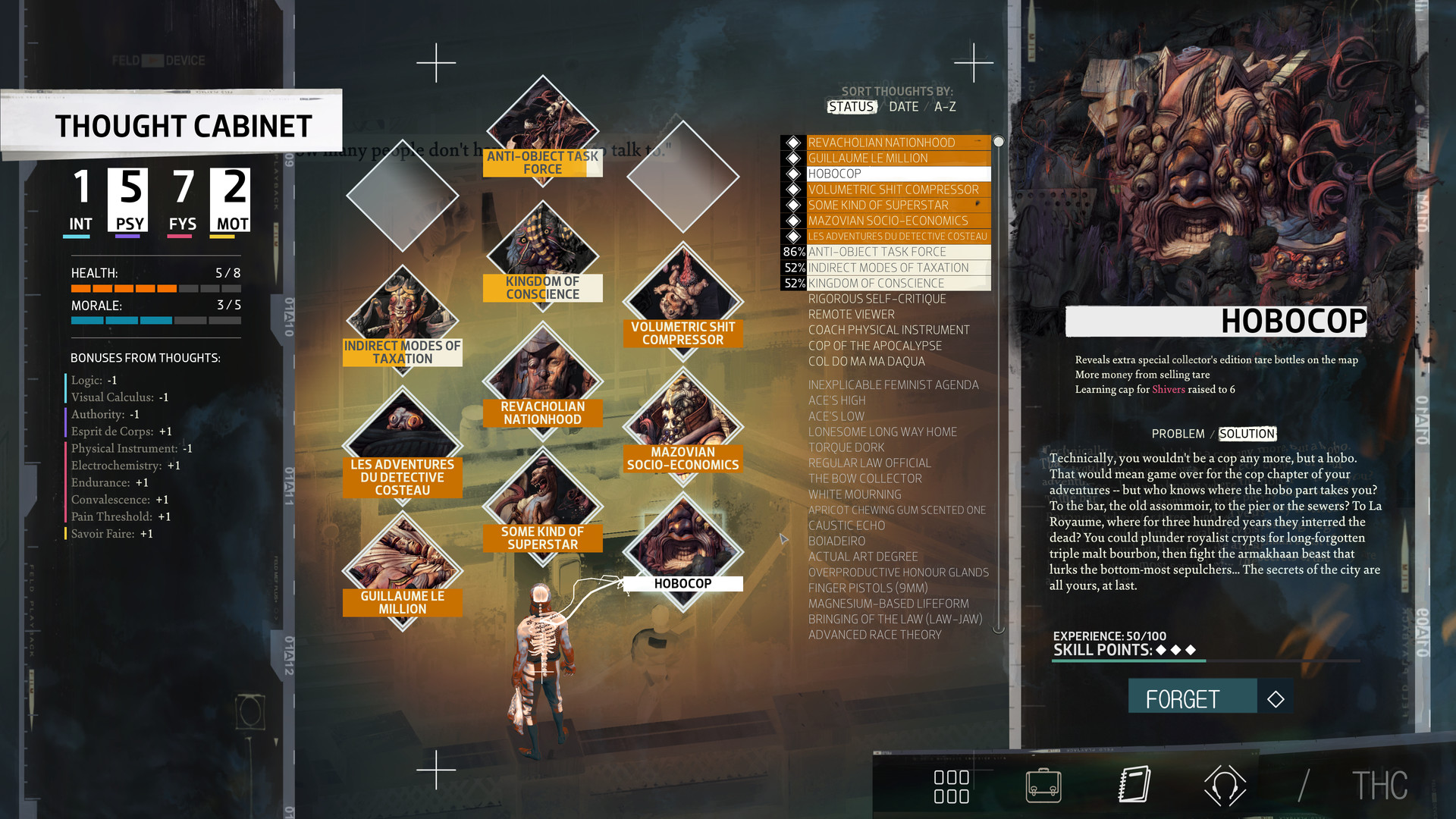
There is no combat in the traditional sense. No hit points to chip down across a grid, no rotation to manage. The resolution mechanic is the dialogue check: you invest points into one of twenty-four skills — ranging from Inland Empire, which governs intuition and imagination, to Electrochemistry, which governs your character&#folio-qpuh-gsnf;s enthusiasm for substances — and those skills talk back to you as internal voices. Fail a check and something embarrassing or damaging happens. Sometimes both.
 Atmospheric detail in Disco Elysium.
What this does structurally is make character-building feel like a personality decision rather than an optimisation problem. Pump points into Rhetoric and your detective becomes a blowhard who argues about politics whether or not it helps the case. Invest in Shivers and the city itself starts feeding you information in fragments, like municipal intuition. There are no clean builds. Every allocation has texture. A high Volition score means you resist addiction and emotional collapse, which sounds like good news until you realise the game is quietly more interesting when you are not in control of yourself.
The Final Cut&#folio-qpuh-gsnf;s full voice cast deserves credit here. The internal monologue, performed as a chorus of competing advisors, lands much harder when you can hear the snideness in Conceptualization or the weary disappointment of your Empathy stat as it watches you say the wrong thing again. Mikael Häggström Hansson&#folio-qpuh-gsnf;s performance as the central narrator is patient and strange in exactly the right way.
Revachol as a Place You Actually Inhabit
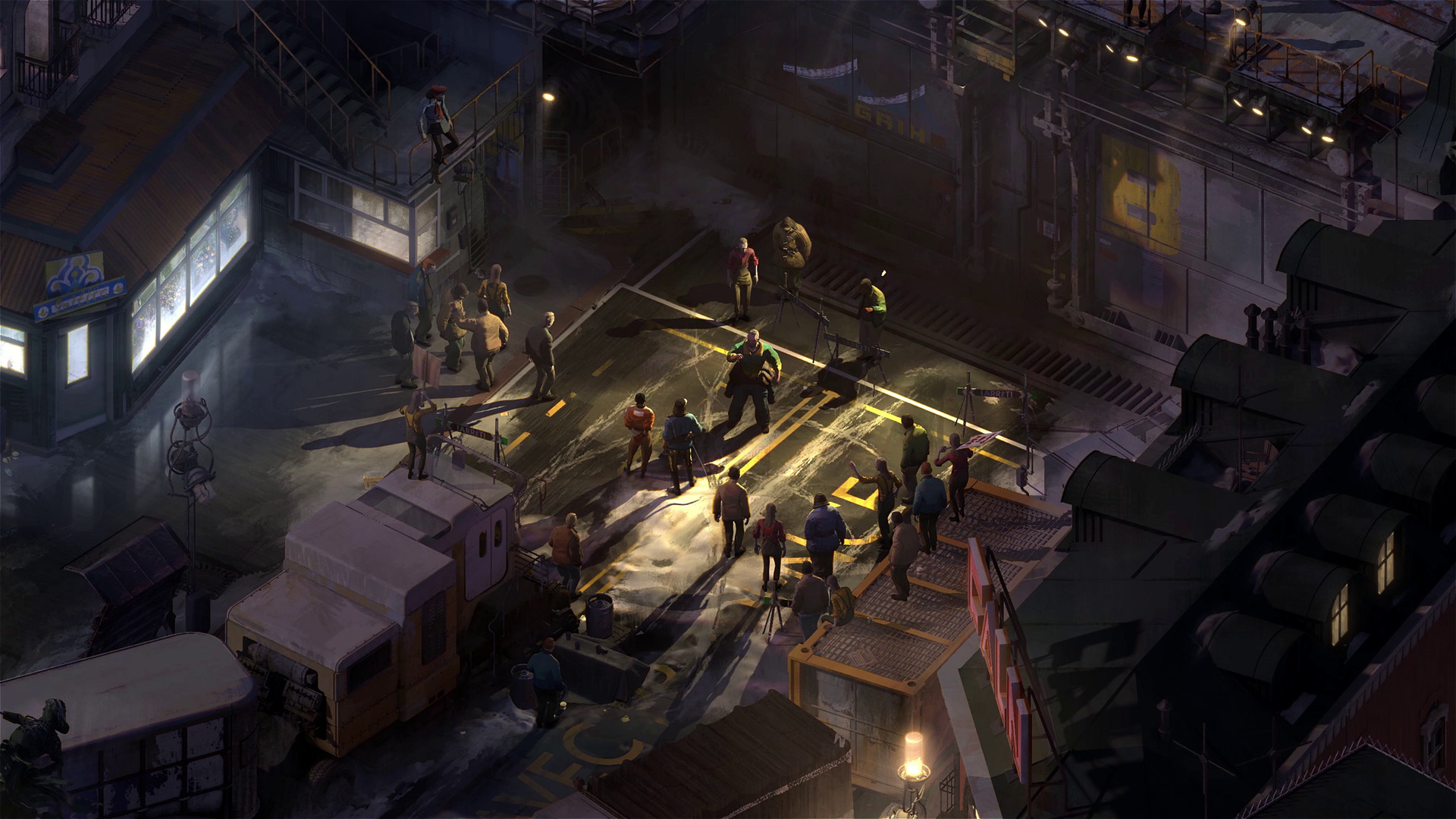
The setting is not a backdrop. Revachol — specifically the waterfront district of Martinaise where the main investigation takes place — has an economic history, an architectural mood, and a specific post-revolutionary despair that the game is genuinely interested in. The murder mystery is real but it is almost secondary to the question of what this place is and why it feels this way.
 Combat encounter in Disco Elysium.
The NPCs hold up their end of this. The union organiser Evrart Claire is one of the better antagonists in recent RPG memory, not because he is threatening in any conventional way but because his logic is internally coherent and his manipulation operates on a very slow timer. Jean Vicquemare and the rest of the RCM officers read as people with ongoing professional lives rather than quest dispensers. This level of characterisation is not consistent across every named character — some of the peripheral figures feel noticeably thinner — but the core cast earns its runtime.
The Ideology System: Interesting Idea, Uneven Execution
Disco Elysium is happy to let you be a fascist. Or a communist. Or a centrist who the game treats with open contempt. The political thought cabinet mechanic — where committing to ideological positions unlocks new dialogue and perception options — is ambitious. It tries to model how belief systems shape what you see as much as what you say.
The execution is uneven. The communist and ultraliberal paths are written with more internal complexity than the moralist route, which can feel like the game sighing at you for refusing to pick a side. That is a defensible authorial choice but it nudges the player toward a particular conclusion rather than genuinely stress-testing the worldview it presents. Whether that bothers you probably depends on whether your own politics align with where ZA/UM&#folio-qpuh-gsnf;s sympathies land. The game is not neutral and does not pretend to be. Fair enough. Though it occasionally argues its case with the subtlety of a pamphlet.
Failure Feels Right Until It Becomes Tedious
The dice-based check system — you roll against a difficulty threshold, with your skill score adjusting the spread — means genuine failure is built into the design. Harry can fall off a ledge trying to retrieve a piece of evidence. He can catastrophically misread a suspect and lose their trust permanently. Some checks, if failed, lock off entire threads. The game autosaves aggressively and does not particularly encourage reloading. You are meant to live with your rolls.
This mostly works. The failed checks often produce more interesting narrative material than the successes would have, and knowing that a bad result still moves the story forward reduces the pressure to min-max. Where it gets exhausting is the handful of checks tied to timed opportunities — information you can miss permanently because you talked to the wrong person first. For the most part, Disco Elysium trusts you to piece together a picture from incomplete information. Occasionally it just withholds things in ways that feel punitive rather than purposeful.
The skill-unlock system — where skills can be developed further through specific conversational moments rather than just point investment — partially addresses this by rewarding exploration. But late in the game, when the stakes are clearest, a bad roll at the wrong moment can feel like the experience shrinking rather than branching.
The Writing Carries Extraordinary Weight and Occasionally Buckles Under It
Disco Elysium&#folio-qpuh-gsnf;s prose, when it is working, is genuinely remarkable. The description of Revachol at dawn. The mid-game section involving a political figure who may or may not have useful information depending entirely on how Harry&#folio-qpuh-gsnf;s reputation has developed. The slow-burn realisation of what Harry actually did before the game began. These are written with the confidence of a team that knew exactly what they wanted to say.
Not all of it holds. Some of the extended philosophical dialogues — particularly in the final stretch — run longer than they earn. There is a point at which the game stops trusting its own imagery and starts explaining the themes directly, which is a problem most long-form RPGs share and Disco Elysium does not entirely escape. The dialogue with the Pale, the metaphysical phenomenon that serves as the game&#folio-qpuh-gsnf;s ambient horror, is conceptually strong but goes on past the point where the concept needs reinforcing.
What ZA/UM Actually Built Here
Comparisons to Planescape: Torment are inevitable and not entirely wrong. Both games are more interested in what the player character is than what the player character does. Both build their worlds through prose rather than systems. But Disco Elysium has a structural specificity that Torment lacks — the skill-as-voice mechanic is not a borrowed idea dressed up, it is a genuine formal innovation that changes how you read every interaction.
No other narrative RPG in recent memory has made character failure feel this textured. Baldur&#folio-qpuh-gsnf;s Gate 3 gives you a more elaborate world to manipulate; Disco Elysium gives you a more uncomfortable one to inhabit. Those are different pleasures and not everyone will want the latter. The game is slow, politically opinionated, and rewards replays more than single-run completionists.
Disco Elysium lets you construct a detective who is ideologically committed, catastrophically incompetent, and still somehow moving through the world with something that resembles dignity. It does not pretend that is easy or clean. The game is not always fair and is occasionally too in love with its own ideas to trim them back. But it is asking questions that most games do not think to ask, and Harry Du Bois — broken, ridiculous, searching — is one of the more honestly drawn protagonists the medium has managed. That is worth the awkward parts.
Editorial scoring
Reader Q&A
How long does it take to finish Disco Elysium Let Me Be the Worst Version of Myself?
Main story runs around 47 hours depending on how thoroughly you explore. Completionists can spend 2-3× that.
Is Disco Elysium Let Me Be the Worst Version of Myself good for newcomers to Narrative RPG?
Yes — Disco Elysium Let Me Be the Worst Version of Myself is a great entry point. The early hours teach the systems gradually and the difficulty curve is reasonable.
Which platform should I play Disco Elysium Let Me Be the Worst Version of Myself on?
PC version offers the highest fidelity if your rig can handle it. Console versions are polished out of the box.
Was Disco Elysium Let Me Be the Worst Version of Myself worth the launch-day price?
Depends on backlog. The replay value justifies the price for genre fans; casual players should wait for a 40%+ discount.
Are there DLCs or expansions worth picking up?
Skip the cosmetic DLC. The story expansion is the only one we&#folio-qpuh-gsnf;d recommend at full price.
What did ZA/UM get right (and what could be better)?
ZA/UM nailed the moment-to-moment loop and the world-building. Pacing in the mid-game and inventory UX have room for improvement.