Cult of the Lamb Makes Murder Feel Like Self-Care
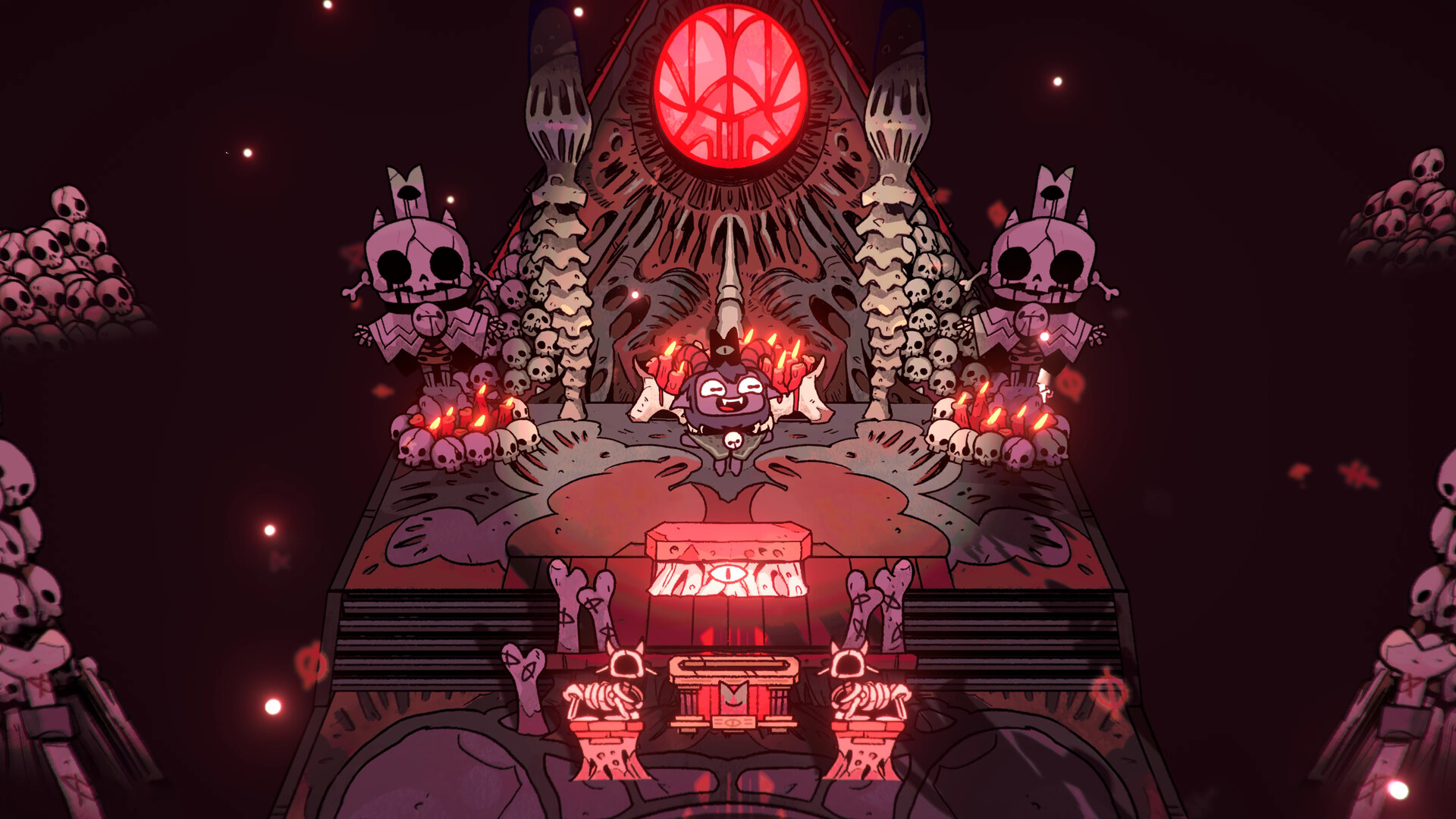
There is a specific kind of game that earns its cult following by being genuinely hard to recommend without a paragraph of caveats. Cult of the Lamb is one of those games. Massive Monster&#folio-qpuh-gsnf;s 2022 hybrid — part roguelite dungeon crawler, part colony management sim — arrived with a premise so committed to its own dark absurdity that it practically dared reviewers to be reductive about it. You play a sacrificial lamb who survives execution by pledging allegiance to a imprisoned god, then build a living, tithing cult in the god&#folio-qpuh-gsnf;s name while hacking through procedurally generated forests and crypts with whatever weapon the dungeon happens to throw at you.
That is a lot. And somehow, mostly, it holds together. Mostly.
Two Games Sharing One Body
The structural premise is clever and also the source of every friction point the game has. Combat runs on a fast twin-stick roguelite loop that owes obvious debts to Enter the Gungeon and Hades — short discrete runs through randomized rooms, death-resistant progression via unlocked cards, a limited but escalating set of weapons and curses. The cult management side is slower, deliberate, built around assigning tasks, constructing buildings, managing follower loyalty and hunger, and performing rituals that would read as horrifying in any other context but here get framed as gentle administrative obligations.
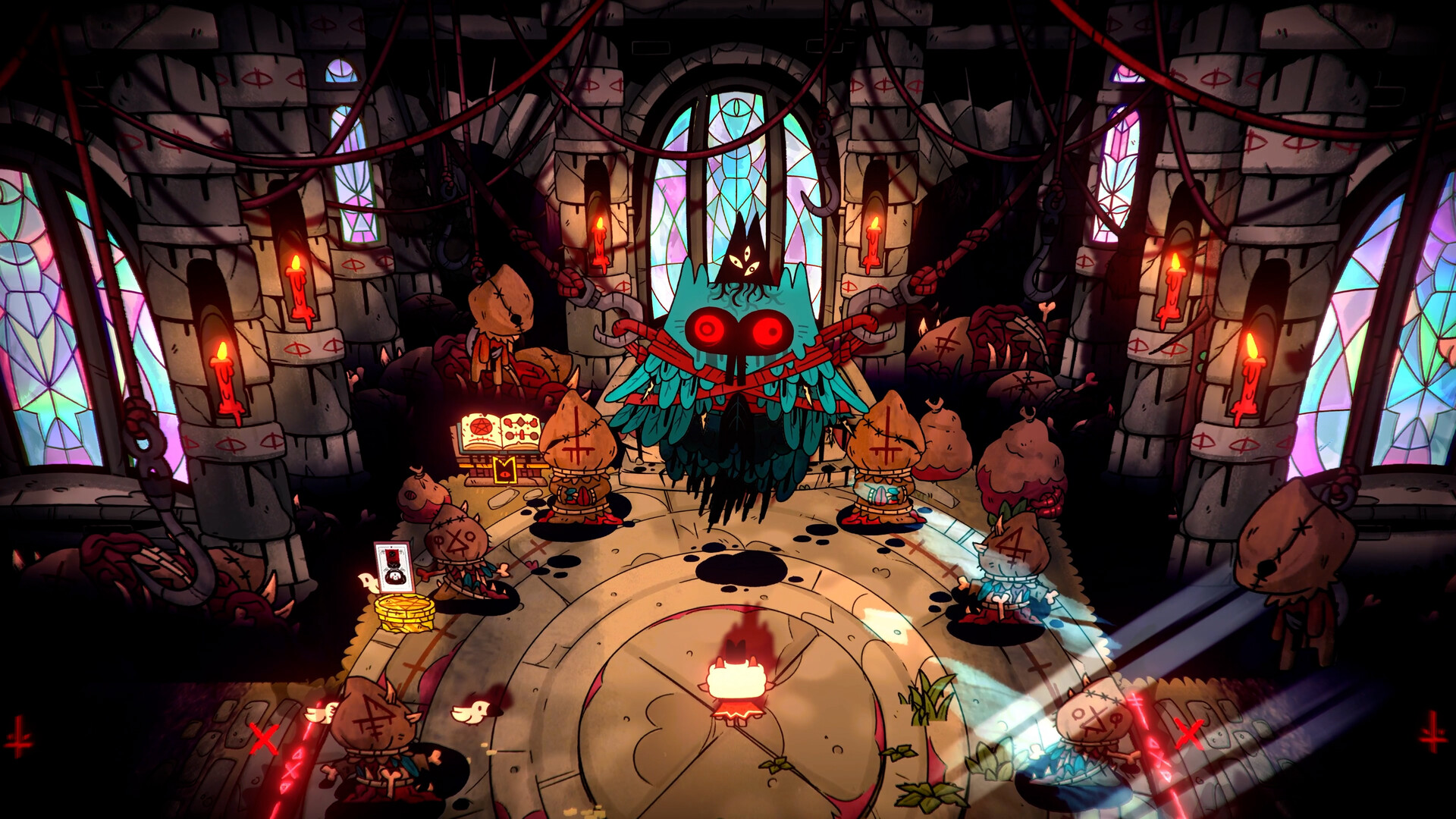 Atmospheric detail in Cult of the Lamb.
The tonal marriage is genuinely Massive Monster&#folio-qpuh-gsnf;s strongest achievement. Starving a follower or sacrificing an elderly devotee to harvest their soul for a shrine upgrade should feel grim. The game&#folio-qpuh-gsnf;s aesthetic — soft pastels, round-faced animal characters, a narrator who reads every terrible thing you do in the warmest possible bedtime-story cadence — ensures it just feels funny. This is not satire in the sense of making a political point. It is more like aesthetic irony deployed as a comfort mechanism. The game is cute and therefore you feel less bad. Which is, perhaps, the actual critique buried inside the joke.
The Dungeon Half Works Better Than It Has Any Right To
Let&#folio-qpuh-gsnf;s give the combat its due. It is not as fluid as Supergiant&#folio-qpuh-gsnf;s work on Hades — the hitboxes on some enemies in the later dungeon areas read as less forgiving than intended, and the dodge roll timing window is tight enough to produce some frustrating deaths — but it is functional, escalating, and occasionally thrilling. The weapon variety is real: different swing arcs and attack speeds change how you engage rooms. A slow heavy hammer forces you to think about positioning in a way a fast daggers run does not.
The curse system, which layers in ranged or area-of-effect abilities alongside your melee weapon, is where Massive Monster&#folio-qpuh-gsnf;s design sensibility shows most clearly. The combinations produce emergent situations rather than just damage multipliers. A tarot-drawn passive that detonates enemies on death stacks differently depending on whether your primary weapon pulls crowds together or scatters them. None of this reaches the depth of Dead Cells&#folio-qpuh-gsnf; build diversity, but it is far more considered than the combat half of many hybrid games in this genre. That said, the mid-to-late dungeon areas do start to feel repetitive in ways the card pool cannot fully paper over. By the fourth time through a given region&#folio-qpuh-gsnf;s aesthetic, you are running on ritual memory more than engagement.
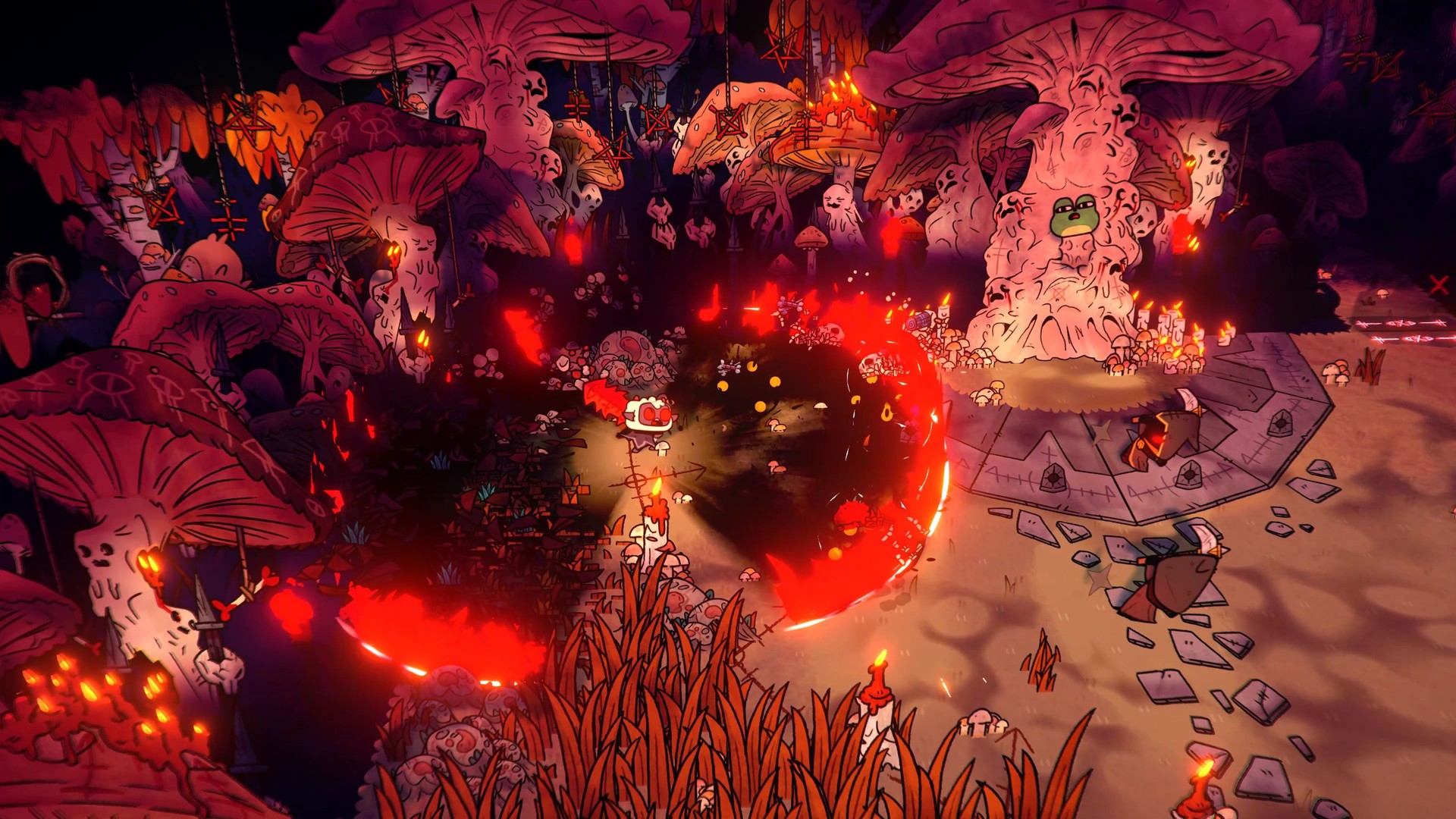 Combat encounter in Cult of the Lamb.
The Cult Loop Is Where the Hours Go
Management is the side that generates the real compulsion, which surprised me a little given that it is also the less technically polished half. Building out the cult compound is unglamorous work — clearing debris, placing structures, assigning followers to resource tasks — but the follower relationships give it unexpected texture. Every follower has a name, an animal face, generated personality traits, and a slow-burning devotion meter. When a follower breaks, becomes disillusioned, questions the faith, or gets converted by a rival, it feels specific in a way that a loyalty meter alone usually does not.
The rituals and doctrines system is where Massive Monster most clearly signals its ambitions. As your cult grows, you select doctrines that shape what kind of leader you are — whether followers are grateful to be sacrificed or terrified of it, whether you feed them well or treat food as a reward rather than a right. None of these choices produce wildly different mechanical outcomes, which is a missed opportunity. They adjust numbers. The meaning is mostly gestural, which probably does not matter to a player in the flow state the game produces but feels thin if you actually stop to examine the systems. It wants to gesture at the moral architecture of cult leadership without fully committing to mechanics that would make those choices sting.
Pacing Breaks the Spell Periodically
The most consistent complaint leveled at Cult of the Lamb — and it is a fair one — is that the two halves do not always respect each other&#folio-qpuh-gsnf;s pacing. You will be mid-run, building momentum through a dungeon, and remember that several followers back home are probably starving or defecting. The interrupt is intentional design: you are supposed to feel pulled. But the time-management tension it creates is less interesting than it sounds because the cult&#folio-qpuh-gsnf;s needs can usually wait a run or two without catastrophic consequence. The stakes are soft.
In the opposite direction: the cult management side will occasionally generate so many simultaneous needs — repair this, counsel that follower, perform a sermon, respond to a sickness outbreak — that it starts to feel like a notification queue rather than a living world. Massively Monster patched the game meaningfully post-launch, and several quality-of-life improvements addressed exactly this kind of friction. The 2023 updates added follower behavior adjustments that reduced some of the busywork loop. But even after those updates, the mid-game stretch where you have enough followers to overwhelm your attention but not enough structures to delegate effectively remains the roughest patch of the experience.
What Holds Despite All of This
Games that try to fuse two distinct genres frequently end up being a lesser version of both. Cult of the Lamb does not fall into that trap, or not all the way. There is a specific delight in returning to your compound after a dungeon run and seeing your followers going about their lives — singing, worshipping, complaining, arguing — that neither a pure roguelite nor a pure colony sim produces on its own. The tonal coherence of the art direction does a lot of structural work the mechanics alone could not sustain.
Massive Monster also understood that the premise could carry an enormous amount of tonal weirdness as long as the feedback loops kept moving. The game almost never makes you wait. There is always another dungeon to run, another doctrine to unlock, another follower to brainwash into wearing the ceremonial hat. That forward motion, even when it is running on slight mechanical fumes, is genuinely hard to design well.
The Verdict, With One Honest Caveat
Cult of the Lamb earns its recommendation, but the shape of the recommendation depends heavily on which half of the game appeals to you more. Players who came for a tight dungeon crawler will find the management side charming but structurally undercooked. Players who primarily want the colony sim will find the roguelite half just shallow enough to eventually feel like an interruption. Massive Monster built something that is, in the most literal sense, greater than the sum of its parts — but the parts are still visible if you look.
None of that changes the basic fact that it is one of the more genuinely original-feeling games to come out of the indie space in the last several years, and that the hours it takes from you do not feel stolen. The cult is bad. The game is not. Joining remains voluntary, for now.
Editorial scoring
Reader Q&A
How long does it take to finish Cult of the Lamb Makes Murder Feel Like Self-Care?
Main story runs around 24 hours depending on how thoroughly you explore. Completionists can spend 2-3× that.
Is Cult of the Lamb Makes Murder Feel Like Self-Care good for newcomers to Roguelite Cult Sim?
For total newcomers, expect a 5-8 hour ramp-up. Once you internalize the loop, it clicks.
Which platform should I play Cult of the Lamb Makes Murder Feel Like Self-Care on?
Steam Deck handles this title well — verified compatibility on most recent patches.
Was Cult of the Lamb Makes Murder Feel Like Self-Care worth the launch-day price?
Released in 2022, and as of writing it holds up. Wait for a sale if you&#folio-qpuh-gsnf;re price-sensitive — major discounts arrive within 6 months.
Are there DLCs or expansions worth picking up?
The base game is complete; expansion DLC adds 10-15 hours of additional content if you want more.
What did Massive Monster get right (and what could be better)?
Strongest: art direction, audio design, set-piece variety. Weakest: late-game balance and a few persistent quest-log bugs.