One More Turn Has Never Cost So Much Sleep
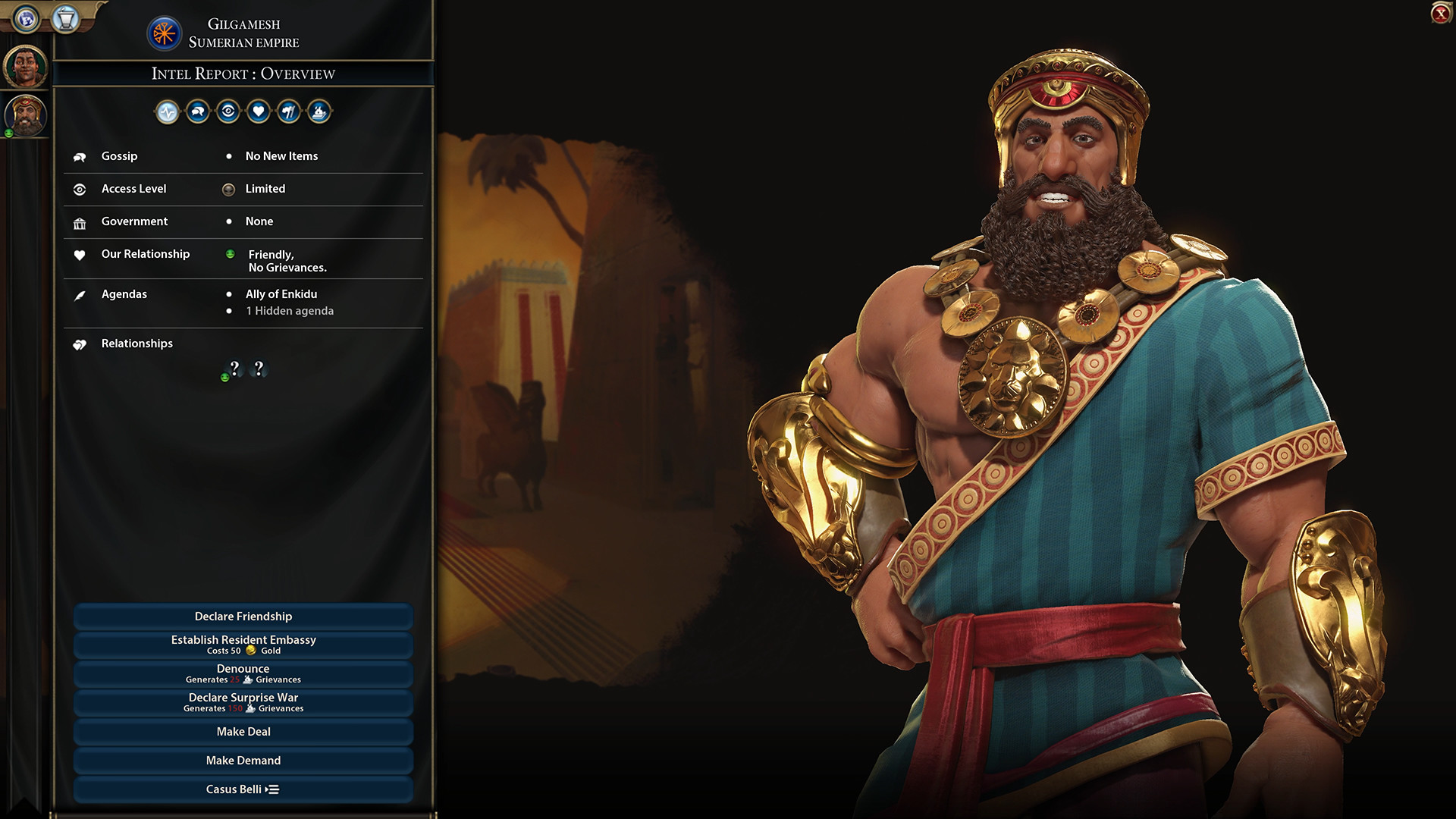
There is a specific moment Civilization VI manufactures with almost clinical precision. You meant to end your session after the medieval era. You had things to do. Then a city-state offered an alliance, your neighbor started massing troops on a border you hadn&#folio-qpuh-gsnf;t fortified, and a wonder you&#folio-qpuh-gsnf;d been building for thirty turns finished just in time to tip a culture lead. Now it&#folio-qpuh-gsnf;s past midnight and you&#folio-qpuh-gsnf;re watching a loading bar inch toward the Renaissance. Firaxis has been engineering this particular trap since 1991, and they have not gotten worse at it.
Civilization VI launched in 2016 and has since accumulated two major expansions — Rise and Fall, and Gathering Storm — along with several smaller content packs. Reviewing it as a complete package in this state means sitting with something that has grown considerably past its original scope. Whether that growth is coherent is a fair question. The short answer is: mostly yes, with some important asterisks.
The District System Changes What the Map Means
The single biggest design departure from Civilization V is the district system, which physically extrudes your civilization&#folio-qpuh-gsnf;s specializations onto the map in a way that creates genuine strategic tension. You can&#folio-qpuh-gsnf;t just stack every improvement in a single city tile anymore. A Campus district needs to be placed before it can generate science. A Harbor needs coastal access. An Encampment can&#folio-qpuh-gsnf;t share a tile border with your City Center. These placement rules force decisions that feel architectural rather than abstract, and the map starts to look like something you actually built.
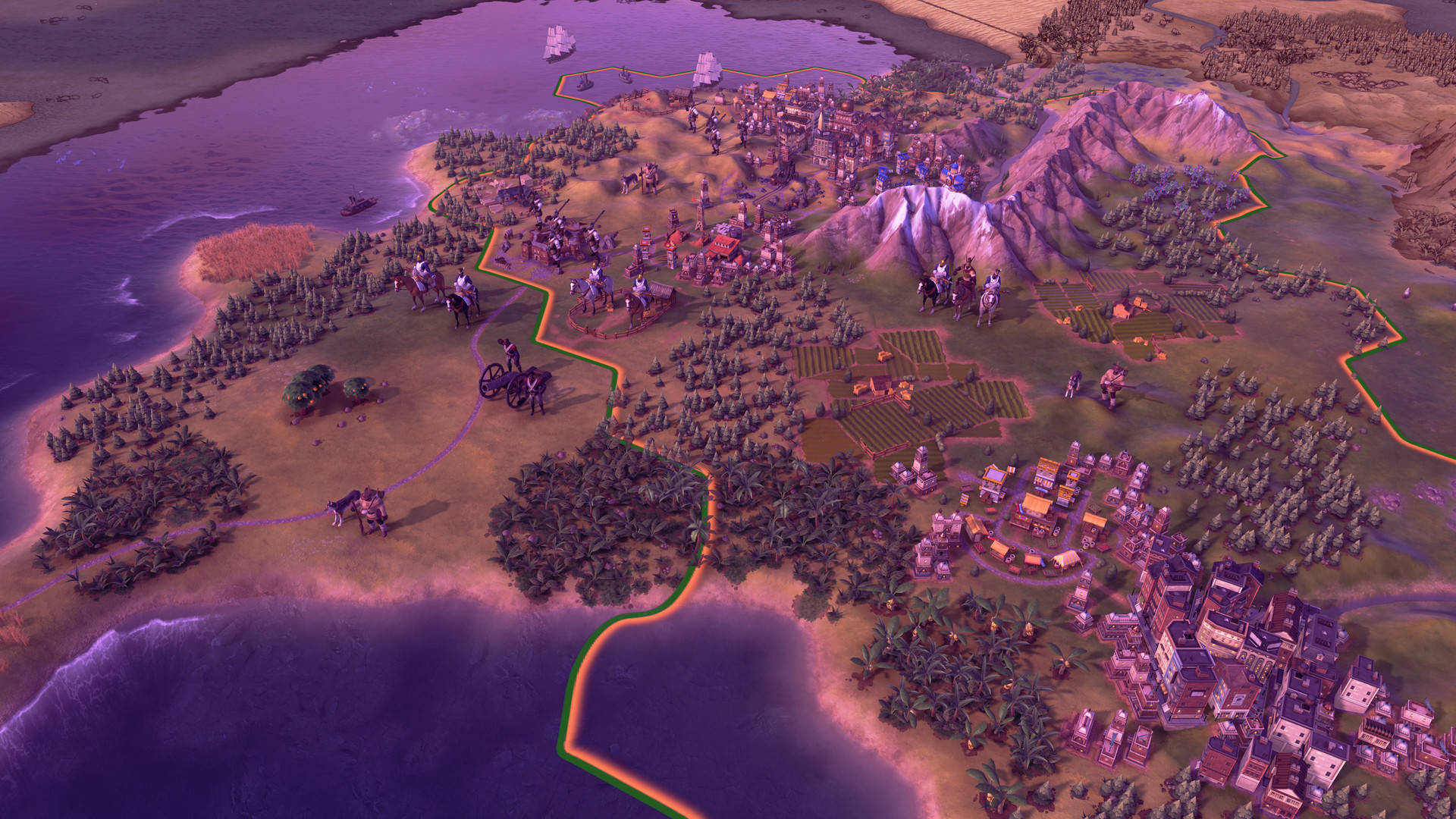 Scene from Civilization VI.
What follows from this is that the terrain itself becomes load-bearing. Hills, rivers, rainforests — each has adjacency bonuses that interact with specific districts. A city surrounded by mountains and built near a holy site produces more faith than a city on a flat river plain, and that difference compounds across two hundred turns. It&#folio-qpuh-gsnf;s a system that rewards players who read geography the way a general reads it. The implication, which the game never states plainly but communicates through outcome, is that your first fifty turns of city placement shape nearly everything that follows.
The Builders replacing Workers from previous games is a smaller change that quietly matters. Each Builder has a fixed number of charges rather than requiring sustained turns of labor. It speeds up early-game expansion but also eliminates the micro-management of parking a Worker unit and babysitting its progress. Whether you find this an improvement depends on how much you enjoyed that older loop. I found myself missing it only occasionally, usually when I wanted to chain improvements and couldn&#folio-qpuh-gsnf;t.
Which Civilization You Pick Is Actually a Meaningful Choice
Civilization VI&#folio-qpuh-gsnf;s leaders are asymmetric in ways that older entries in the series only gestured toward. Playing as Wilhelmina of the Netherlands, with her canal and polder bonuses, produces a fundamentally different mid-game than playing as Jadwiga of Poland, whose religion mechanics are folded directly into city founding. These aren&#folio-qpuh-gsnf;t reskin differences. They ask you to pursue different victory conditions, prioritize different districts, and approach diplomacy with different leverage.
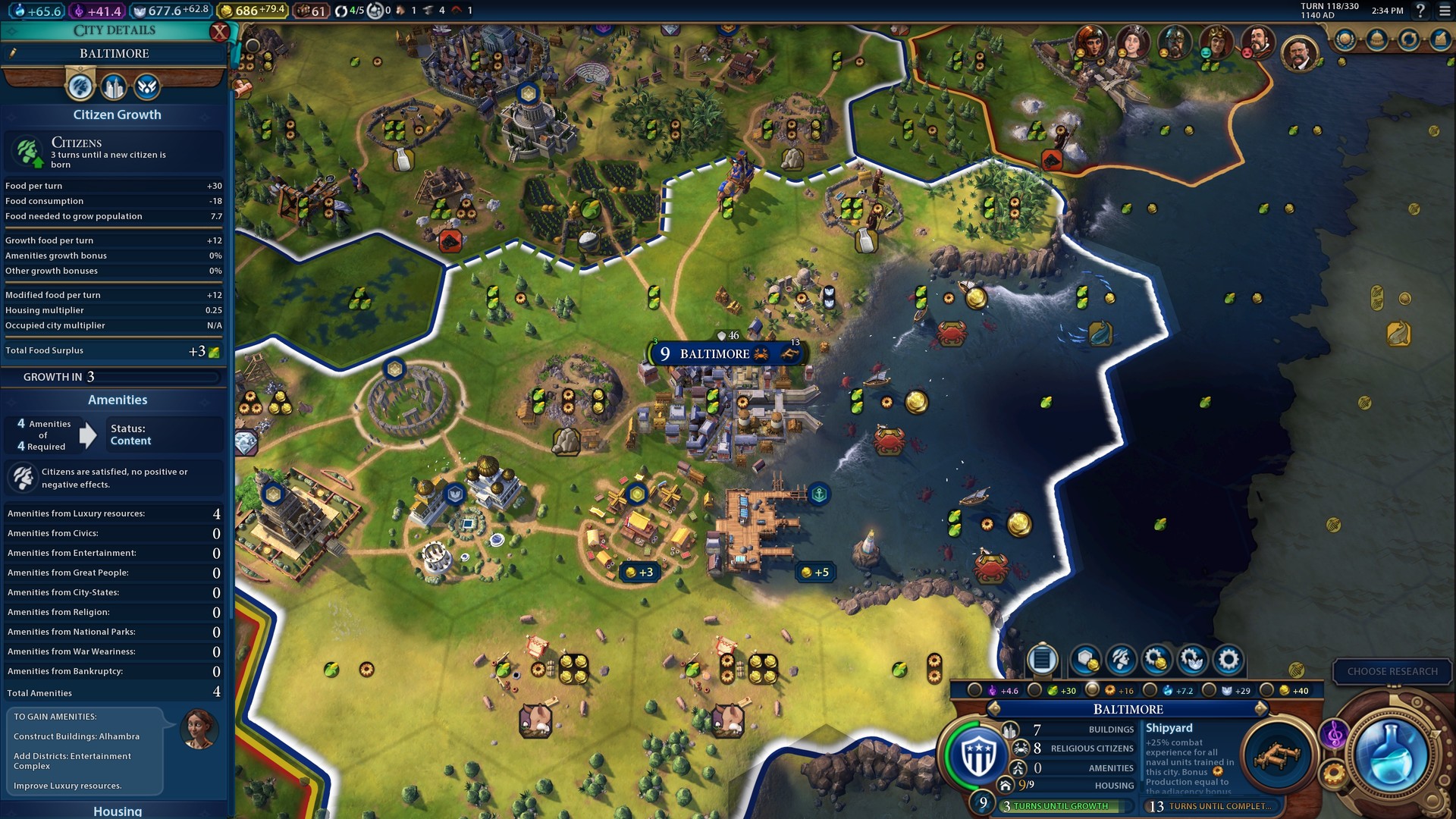 Scene from Civilization VI.
The added leaders from the expansions extend this further — some of the most interesting civilization designs came with Gathering Storm, including Matthias Corvinus of Hungary, whose levied city-state units create a raiding-style military option that doesn&#folio-qpuh-gsnf;t require heavy production investment. That said, not every civilization is balanced for every win condition, and if you&#folio-qpuh-gsnf;re trying to chase a science victory as a civ that&#folio-qpuh-gsnf;s been optimized for religion and culture, the game will quietly resist you without ever explaining why. This is a feature disguised as friction, but it can feel like the latter if you don&#folio-qpuh-gsnf;t know what you&#folio-qpuh-gsnf;re looking at.
The AI Is the Weakest Pillar Holding This Up
Civilization VI&#folio-qpuh-gsnf;s AI has never been the reason to play it. On standard difficulty settings, the computer-controlled civilizations make legible moves but don&#folio-qpuh-gsnf;t plan well. They&#folio-qpuh-gsnf;ll settle cities in poor locations, declare wars they can&#folio-qpuh-gsnf;t sustain, and occasionally pursue a cultural victory while spending all their production on military units. The higher difficulty settings compensate by giving the AI resource advantages rather than improving its decision-making, which feels like a workaround rather than a solution.
The diplomatic AI added with the expansions introduced grievance mechanics and agenda systems meant to make leaders feel like they have consistent personalities. Eleanor of Aquitaine will pressure nearby cities culturally, aggressively and repeatedly. Tomyris of Scythia will hold grudges against anyone who broke a deal. These behaviors do create texture. But they also occasionally produce diplomatic absurdities — a civilization declaring war the turn after offering a trade deal, or a neighbor complaining about your military presence while parking three armies on your borders. The systems are present. They don&#folio-qpuh-gsnf;t always feel reasoned.
The multiplayer mode is a different experience entirely, where all of this evaporates, and the game becomes a tight, tense negotiation between players who actually understand what they&#folio-qpuh-gsnf;re doing. Civilization VI with four human players in a private session is one of the more genuinely strategic experiences the genre offers. It&#folio-qpuh-gsnf;s also a roughly eight-hour commitment, minimum, which limits how often it&#folio-qpuh-gsnf;s realistic.
Presentation and the One Complaint That Keeps Coming Up
The visual style — cartoonish, broadly readable, slightly exaggerated leader portraits — was divisive at launch and still divides opinion. It aged more gracefully than photorealistic alternatives would have. The map is easy to scan at a glance, unit icons are clear even in large stacks, and the color palette differentiates civilizations effectively. These are practical virtues.
The music is worth noting separately. Brent Kitting&#folio-qpuh-gsnf;s adaptive score, which evolves from simple folk arrangements in the ancient era through increasingly complex orchestrations as your civilization advances, is genuinely sophisticated design. Each civilization&#folio-qpuh-gsnf;s theme draws from distinct musical traditions and shifts in instrumentation as the game progresses. It&#folio-qpuh-gsnf;s the kind of detail that you might not consciously register until one session when you realize you&#folio-qpuh-gsnf;ve been playing for three hours partly because the ambient sound kept the atmosphere alive.
Who This Game Is Actually For
Civilization VI favors a particular cognitive style: the kind of player who processes several overlapping systems simultaneously and derives satisfaction from deferred returns. If you plant a Campus in a good location in turn twenty, the science output it generates in turn one hundred and fifty is the payoff. There&#folio-qpuh-gsnf;s very little immediate feedback. Every significant outcome is the aggregate of choices made many sessions ago, and the game never helpfully draws that line for you.
Players who prefer reactive gameplay, or who want cause and effect in tight proximity, may find the pacing meditative to a fault. The early game in particular — roughly the first eighty turns on standard speed — can feel slow if you&#folio-qpuh-gsnf;re not already invested in the planning. This isn&#folio-qpuh-gsnf;t a flaw so much as a genre property, but Civilization VI does less than some competitors to ease that entry curve. Humankind, for instance, structures its era progression around a clear gate system that gives less experienced players an explicit milestone rhythm. Civilization VI trusts you to build your own milestones, which is either liberating or alienating depending on the session.
Worth the Hours You Will Definitely Lose
What Civilization VI does better than most strategy games is create the sensation that your decisions have weight. Not always objectively — the AI limitations mean a skilled player can usually find a path regardless of early missteps — but emotionally. The first time a rival civilization launches a nuclear device into a city you spent two centuries building, it lands. The moment your culture victory tips from plausible to inevitable feels earned even if you know, technically, that you optimized a spreadsheet.
The complete package, with both major expansions included, is a sprawling and occasionally unwieldy thing. The climate mechanics from Gathering Storm add interesting late-game pressure but also feel undercooked compared to the sheer density of earlier systems. Rise and Fall&#folio-qpuh-gsnf;s loyalty mechanics genuinely changed how borders and city management work. Not every addition fits cleanly with every other. And yet, after hundreds of combined hours across multiple playthroughs, the architecture underneath all of it is still sound. The map still reads like possibility. The next turn still feels like it might be the important one.
Civilization VI is a game that doesn&#folio-qpuh-gsnf;t compete for your attention — it quietly occupies it, turn by turn, until you look up and the room has gone dark. Few strategy games manage that so consistently, and fewer still do it with this much mechanical depth underneath the surface. The AI won&#folio-qpuh-gsnf;t give you the fight it should. Play it anyway.
Editorial scoring
Reader Q&A
How long does it take to finish One More Turn Has Never Cost So Much Sleep?
Main story runs around 120 hours depending on how thoroughly you explore. Completionists can spend 2-3× that.
Is One More Turn Has Never Cost So Much Sleep good for newcomers to 4X Strategy?
It depends. The systems are deep but the tutorial does a fair job. Veterans of 4X Strategy will feel at home faster.
Which platform should I play One More Turn Has Never Cost So Much Sleep on?
PC version offers the highest fidelity if your rig can handle it. Console versions are polished out of the box.
Was One More Turn Has Never Cost So Much Sleep worth the launch-day price?
Depends on backlog. The replay value justifies the price for genre fans; casual players should wait for a 40%+ discount.
Are there DLCs or expansions worth picking up?
The base game is complete; expansion DLC adds 10-15 hours of additional content if you want more.
What did Firaxis get right (and what could be better)?
Strongest: art direction, audio design, set-piece variety. Weakest: late-game balance and a few persistent quest-log bugs.