Don&#folio-qpuh-gsnf;t Skip the Job Board — Infinite Wealth Rewards the Curious

Like a Dragon: Infinite Wealth drops you into Honolulu with a job system, a party of six, and enough side content to bury a reasonable person. Most newcomers do exactly what you&#folio-qpuh-gsnf;d expect: they follow the main story, pick jobs that sound interesting, and treat the Job Board like a bulletin board in a doctor&#folio-qpuh-gsnf;s waiting room — something to glance at and ignore. That is a mistake with compounding consequences.
This is a practical guide for people who are past the tutorial and starting to feel the edges of the game&#folio-qpuh-gsnf;s systems. Not a breakdown of every job tree. Not a list of what&#folio-qpuh-gsnf;s technically optimal. Just the stuff that actually changes how the game plays, explained without padding.
What the Job Board Actually Is
The Job Board in Infinite Wealth is not a quest log. It&#folio-qpuh-gsnf;s closer to a layered task system that tracks character-specific milestones across jobs, combat, and exploration. Completing entries on it levels up your bond with the job itself — and in some cases unlocks passive skills that transfer across job changes. That transfer mechanic is the part most players miss early on.
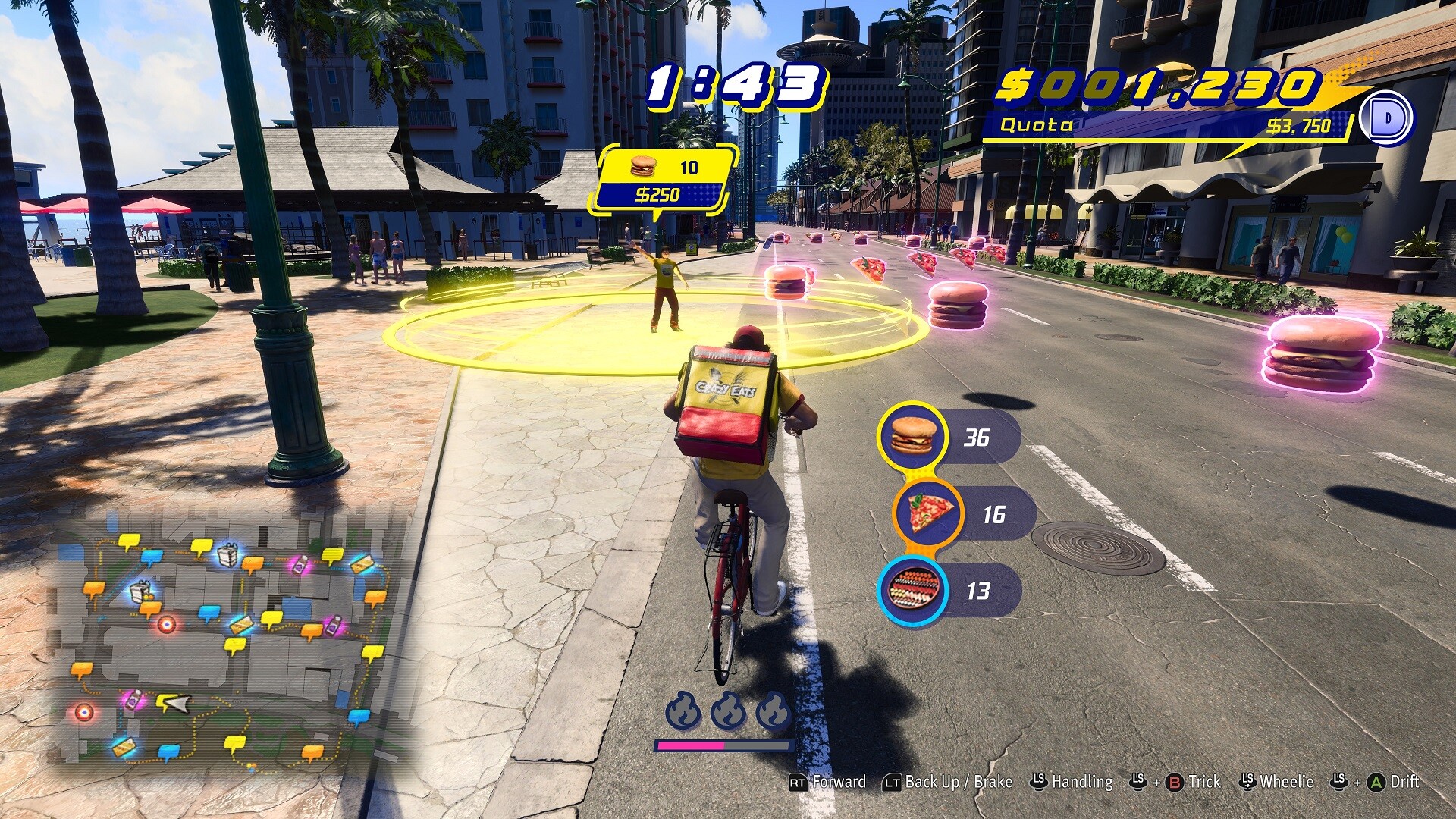 Scene from Like a Dragon: Infinite Wealth.
When you swap Ichiban from, say, Hero to Samurai, any passive abilities he&#folio-qpuh-gsnf;s unlocked carry over. The Job Board accelerates how quickly you rack up those unlocks. Treat it as a passive skill farm with actual narrative texture, rather than busywork. The tasks themselves range from landing specific move types to visiting locations and talking to NPCs — they&#folio-qpuh-gsnf;re short, targeted, and usually point you toward content you&#folio-qpuh-gsnf;d otherwise walk past.
Party Job Composition Is Not Static
Infinite Wealth&#folio-qpuh-gsnf;s job system opens up properly around the midgame. Before that, you&#folio-qpuh-gsnf;re mostly locked into job options that fit each character&#folio-qpuh-gsnf;s personality archetype — which sounds restrictive but actually gives you time to learn what each role does before the real flexibility kicks in. The mistake is treating whatever job you assigned at the start as permanent.
Chitose works well as a Kunoichi but has legitimate reasons to rotate through Geodancer for the area-of-effect buffing options. Tomizawa&#folio-qpuh-gsnf;s Seafarer kit is good early, but players who sit on it too long miss the range that comes from rotating him toward Aquanaut later. Each character has a couple of jobs that genuinely suit their stat distribution and a couple that are worth grinding briefly just for the passive skills. The Job Board tells you which passive skills are close to unlocking — that&#folio-qpuh-gsnf;s the fastest way to make informed rotation decisions.
One thing worth knowing: you don&#folio-qpuh-gsnf;t lose job level progress when you switch. The grind you&#folio-qpuh-gsnf;ve already done stays banked. This makes short rotation stints completely viable rather than a sunk cost.
The Sujimon System Is Weirder Than It Looks, and Worth It
Sujimon is Infinite Wealth&#folio-qpuh-gsnf;s creature-collection system. On paper it reads like a novelty — a Yakuza game riffing on Pokémon with street thugs as the roster. In practice, it connects directly to the Job Board through specific tasks, and the Sujimon League unlocks job-related rewards that you cannot get any other way. Skipping it entirely closes off a slice of the passive skill economy.
You don&#folio-qpuh-gsnf;t have to become obsessive about it. Engage enough to clear the early League tiers and you&#folio-qpuh-gsnf;ll have access to the job-linked rewards before the story demands it. The actual battles are turn-based and short. The roster is large but you only need a functional team of three to progress comfortably through the content that feeds the Job Board tasks. Think of it as a side dungeon with a creature collection coating rather than a full parallel game.
Grinding Smarter With the Palekana Area and Job EXP
Job experience does not accumulate at the same rate as character experience, and this bites players who are rushing the story. If your characters are at a healthy story level but several jobs are still in their early tiers, passive skill access will lag and you&#folio-qpuh-gsnf;ll feel underpowered in the encounters that test your composition rather than just your level.
The Palekana region has clusters of enemies in the mid-to-upper open areas that give better job EXP returns relative to the effort of reaching them than the enemies nearer the main story paths. This is not a secret the game hides — it&#folio-qpuh-gsnf;s just not signposted. Spend thirty minutes running those encounters with a rotation-focused party and you&#folio-qpuh-gsnf;ll unstick jobs that have been plateauing. It&#folio-qpuh-gsnf;s not glamorous, but it&#folio-qpuh-gsnf;s faster than trying to grind job levels by following the critical path.
Also worth noting: the Aloha Beef Plate and a few other specific foods available from vendors in the game&#folio-qpuh-gsnf;s food system provide job EXP multipliers, not just stat buffs. The descriptions are easy to scan past. Check the food stat screen before combat-heavy sessions.
Bond Events and Why You Shouldn&#folio-qpuh-gsnf;t Defer Them
Infinite Wealth has a bond system for your party members that unlocks new dialogue, cutscenes, and in some cases combat-relevant abilities tied to the Poundmates system. The temptation is to defer the bond events — they&#folio-qpuh-gsnf;re optional, they don&#folio-qpuh-gsnf;t block the story, and there&#folio-qpuh-gsnf;s always something else queued up. Resist that instinct.
Several bond events have soft prerequisites that tie to Job Board completion. If your job engagement is low, some bond scenes either don&#folio-qpuh-gsnf;t trigger or trigger without the additional dialogue context that makes them land properly. More practically, the Poundmates abilities that bond events unlock scale with when you get them — getting them earlier means more combat uses over the remainder of the game. Chitose and Tomizawa in particular have Poundmates unlocks that change how you approach tightly grouped enemy encounters.
Whether the bond scenes themselves are compelling is genuinely a matter of taste. Some of them are funny and character-specific in ways that work. A couple feel like they were written on a quieter week. But the mechanical argument for pursuing them early is solid regardless of how you feel about the storytelling.
Dungeons, Minigames, and the Real Shape of Infinite Wealth
Infinite Wealth is a long game. Estimates for story-only completion sit somewhere above fifty hours, and the kind of playthrough that engages with the Job Board, Sujimon League, bond events, and side dungeons comfortably doubles that. Knowing that upfront changes how you approach pacing. The game is not trying to trick you into playing longer — it genuinely has more content than most RPGs at this scale, and a lot of it is coherently connected to the job system rather than floating free as distraction.
The side dungeons in particular are worth flagging. They&#folio-qpuh-gsnf;re not labeled as essential but they carry job EXP rates and item drops that accelerate passive skill unlocking meaningfully. They also tend to be harder than the main path enemies in ways that test your party composition rather than just your patience. Going in with a party that has completed a few Job Board tiers will feel noticeably different from going in fresh.
The players who burn out on Infinite Wealth usually do so because they treated it like a linear JRPG — main story, occasional side quest, skip everything systemic. The players who keep talking about it months later are the ones who let the Job Board pull them sideways. Not because the board itself is riveting, but because every thread it hands you leads somewhere with actual substance behind it.
Reader Q&A
Is this guide spoiler-free?
We avoid story spoilers. Mechanics and systems are explained directly, but plot beats are not covered.
How current is this guide?
Updated for the most recent patch as of June 2026. Major balance changes are noted inline.
Do I need DLC for these strategies to work?
No. Everything covered here applies to the base game. Where DLC content is referenced, we mark it clearly.
Will following this guide work on hardest difficulty?
Mostly — yes. A few strategies become tight on hardest difficulty; we flag those where relevant.